
Last Updated: November 14, 2026
Quick Summary
Most flattened artificial grass can be revived by brushing against the direction the blades grow, working in small sections of about 3 feet. Do this when the turf is dry, and check infill depth in high-traffic spots, since worn infill is a common cause of flattening.
- Let the turf dry fully before brushing, since wet fibers mat more easily.
- Brush against the pile first, then finish with a final pass in the grain direction.
- Use a soft brush for pile under about 1.25 inches and a stiff brush for taller, denser pile.
- Run a power broom on low speed, since high speed can pull fibers from the backing.
- Measure infill depth every few months and top up thin spots in thin layers.
Table of Contents
- Why Artificial Grass Blades Become Flattened
- Diagnose the Problem Before You Start
- Tools You Need to Revive Turf
- How to Fix Matted Artificial Grass Step by Step
- How to Fluff Up New Artificial Grass
- Checking and Restoring Infill in High-Traffic Areas
- Scheduling Brushing and Knowing When to Call a Professional
- Frequently Asked Questions
Why Artificial Grass Blades Become Flattened
Flattened artificial grass blades are one of the most common complaints homeowners raise about their turf. The good news is that most flattening is reversible. Understanding the cause makes the fix much easier.
Blades flatten when the fibers get pressed down and stay down. Traffic, heat, and time all play a role. Once you know which factor is at work in your yard, you can pick the right fix.
Foot and pet traffic patterns
High-traffic zones flatten first. Think of the path from the back door to the grill, the spot where kids run to the swing set, or the area a dog circles every morning.
Pets cause a similar problem. Dogs dig, pace, and lie in the same spots. Their weight and movement compress the pile, and it often mats together. For a deeper look at this, see how to clean pet turf and keep it looking good.
- Doorways and paths take the most steps
- Play areas and dog runs flatten in clusters
- Corners where people turn sharply wear faster
Heat, compression and settling in West Texas
Intense sun can soften fibers and make them slump, especially on south- and west-facing lawns. For West Texas lawns, see preventing artificial turf heat damage in Midland, TX.
Compression happens when heavy objects sit on the turf for long periods. Patio furniture, grills, and equipment can leave permanent dents if they stay in one place. Settling is slower. It happens as the base and infill shift over months and years.
Diagnose the Problem Before You Start
Do not start brushing yet. First, figure out what is actually wrong. Brushing fixes flattened blades, but it will not fix a lump or a dip in the base.
Walk the lawn and check these four things:
- Flat blades that spring back when brushed: This is simple matting. Brushing will fix it.
- Flat blades that stay down: The fibers may be crushed or the infill may be packed too hard.
- Lumps or dips under the surface: This points to an installation or base problem. See how to fix lumpy turf installation.
A quick test: press a flat patch with your hand. If the blades rise a little, brushing will work. If the surface feels uneven underfoot, fix the base first.
Tools You Need to Revive Turf
You do not need a truckload of equipment. Most fixes need a brush, a rake, a hose, and a bag of infill. But the right tool depends on three things: how tall the pile is, what the fibers are made of, and how big the flattened area is. Picking the wrong tool is the most common reason a DIY fix makes the matting worse.
Before you buy, it helps to see what each tool does best:
| Tool | Best For | Cautions |
|---|---|---|
| Soft-bristled brush (nylon or polypropylene) | Light matting, pet hair, routine care on pile under about 1.5 inches | Gentle on fibers; may need several passes on packed areas |
| Stiff-bristled brush | Heavy matting, packed pile on taller, denser turf | Can scratch the surface and loosen fibers if pressed hard |
| Stiff rake or grooming tool | Lifting fibers and spreading infill in small areas | Tines can catch seams and lifted edges |
| Power broom | Large lawns and commercial areas | Run on low speed; high speed can pull fibers from the backing |
| Garden hose | Rinsing debris before brushing | Let turf dry before brushing; wet fibers mat more easily |
Matching the tool to pile height and fiber type
Pile height is the first filter. Short pile (roughly under 1.25 inches) has less fiber to lift and responds best to a soft brush or a grooming rake; a stiff brush on short pile mostly scrubs the backing.
Fiber type is the second filter. Softer, more natural-looking fibers (often used on pet and play areas) scratch and fuzz under stiff bristles, so stay with soft brushes and light pressure.
Area size is the third filter. A hand brush is fine for a patch up to roughly a few hundred square feet.
When a power broom for artificial grass makes sense
A power broom saves hours on large areas. It is a good choice for a whole backyard or a commercial site. For a small patch, a hand brush is usually enough and gives you more control.
Run the broom on a low setting. High speed can pull fibers out of the backing. Check the manufacturer’s instructions for your turf before you start, and keep the broom moving rather than dwelling in one spot.
Heat safety when reviving turf
Other providers sell many brush and broom options. Compare bristle type, handle length, and the size of the surface you need to cover before you pick one. If you are weighing how heavy-use turf is built, see artificial turf built for high foot traffic.
How to Fix Matted Artificial Grass Step by Step
This is the core fix for most flattened turf. Work in small sections so you can check your progress.
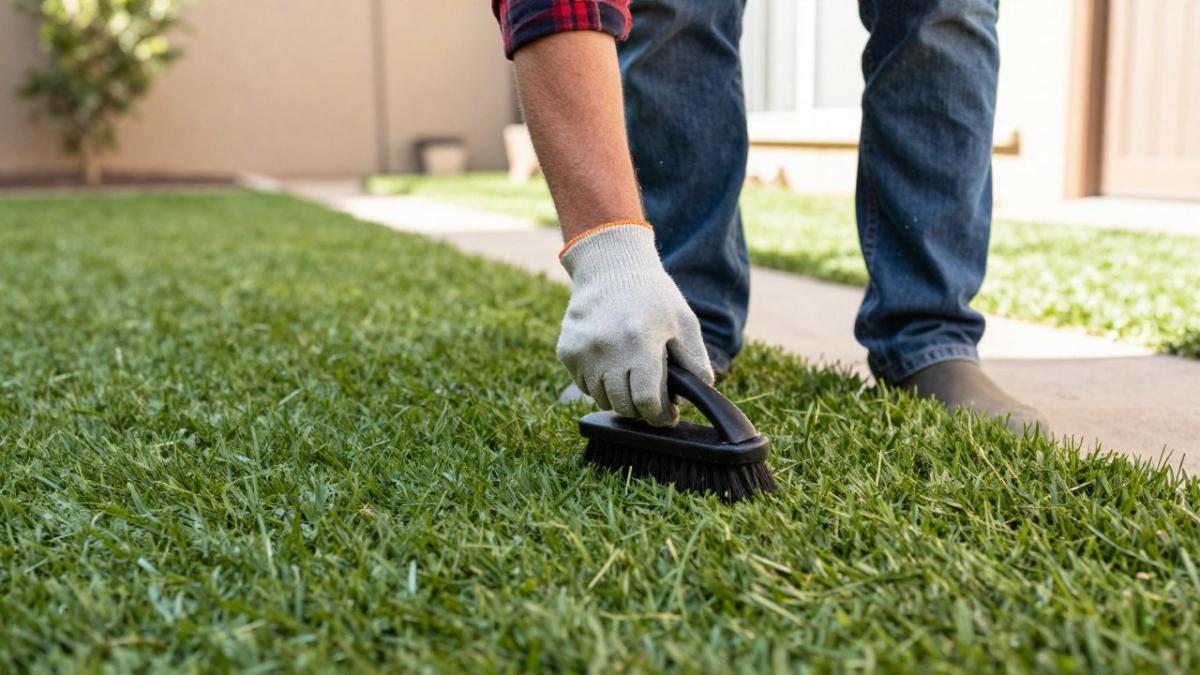
- Remove debris. Pick up leaves, pet waste, and loose objects. Rinse the area with a hose.
- Let the turf dry. Wet fibers mat more easily. Wait until the surface is dry before brushing.
- Brush against the pile. Brush against the direction the blades grow. This lifts them straight up.
- Work in small sections. Brush a patch of about 3 feet at a time, then move on.
- Brush in the grain direction last. A final pass with the grain sets the blades neatly.
- Check your work. Look at the section from a low angle. Blades should stand upright and look even.
Expected result: Most matted areas rise within one or two passes. Heavily compressed areas may need several sessions over a few days.
Watch out: Do not scrub the same spot hard over and over.
For pet-related matting, rinse the area well after brushing to remove odor and hair. Learn more about how to clean pet turf.
How to Fluff Up New Artificial Grass
New turf often looks flat right after installation. This is normal. The fibers were folded in packaging and need time and light brushing to stand up.
- Brush the whole area lightly in one direction, then in the opposite direction
- Repeat over several days, especially in the first two weeks
- Let sun and foot traffic help the blades rise naturally
New turf usually fluffs up within the first few weeks. If it does not, check the base and infill before brushing harder.
Checking and Restoring Infill in High-Traffic Areas
Infill holds the blades upright. When it wears away or packs down, the fibers lose their support and flatten. Check infill depth in the spots that get the most traffic.
- Push a ruler or a rake tine down through the fibers to measure infill depth
- Look for bare backing or infill that has moved to the edges
- Add infill in thin layers and spread it evenly with a stiff brush
Restore high-traffic areas every few months, or sooner if you notice bald patches. Going slow with small additions works better than one heavy dump. For planning ongoing upkeep across busy areas, see industrial landscaping maintenance tips that save crew time.
Scheduling Brushing and Knowing When to Call a Professional
Set a regular brushing schedule, but make it measurable so you can tell whether it is working. A light brushing once or twice a week keeps most lawns looking good. Heavy-use areas like dog runs may need more frequent attention. Adjust the schedule based on how fast your lawn flattens.
A measurable maintenance routine
Instead of brushing on feel, track a few simple checks:
- Pile height check: Once a month, push a ruler down to the backing in three or four high-traffic spots and note the fiber height. If the reading drops noticeably between checks, increase brushing frequency.
- Infill depth check: Every two to three months, measure infill depth in the same spots. A steady loss means infill is migrating and needs topping up.
- Spring-back test: Press a flat patch with your hand. If blades rise within a few seconds, the routine is working. If they stay down after brushing, the fibers may be crushed rather than matted.
A fix has worked when the blades stand upright after one or two passes, the surface feels even underfoot, and the area stays up for at least a couple of weeks before flattening again. If a patch flattens again within days, the cause is usually infill loss or a base problem, not the brushing itself.
Repair limits and warranty before you go aggressive
Not every flattened patch is fixable. Permanently crushed fibers, fibers that have lost their shape from heat, and turf with a worn or torn backing will not stand back up no matter how much you brush. Before you escalate to stiff brushes, power brooms, or heat methods, check the product warranty. Keep your purchase and installation paperwork handy, and photograph the area before and after any treatment so you have a record if you need to make a claim.
When to call a professional
Call a professional if you see any of these signs:
- Lumps, dips, or seams that do not improve after brushing
- Large areas of compacted or bald turf
- Backing that is tearing, lifting, or separating
- Fibers that stay crushed after several gentle brushing sessions
A professional can inspect the base, check drainage, and recommend repairs. Soco Turf Supply can help you choose the right materials for your project and provide guidance on your next steps.
If you are planning a new turf purchase for a high-traffic area, see our guide to artificial turf built for heavy foot traffic. It can help you pick a product that holds up better over time.
Frequently Asked Questions
How do you make flattened artificial grass stand up again?
Start by removing debris, then brush the flattened area against the direction of the pile using a soft or stiff-bristled artificial grass brush. Work in short, overlapping passes until the fibers begin to lift. Check the infill underneath, since a low or uneven infill layer can keep blades pressed down. Repeat brushing over a few days, especially after rain or heavy use, and avoid stepping on the area while it recovers. Most light flattening responds to this routine within a week or two.
Can you brush artificial grass to make it stand up?
Yes. Brushing is the most common fix for flattened blades because it physically lifts fibers that have been pressed down by foot traffic, pets or furniture. Brush across the pile direction rather than with it, and use a brush designed for turf so you do not damage the fibers. Brushing works best on blades that are bent but not permanently crushed. If fibers stay flat after consistent brushing, the cause is often infill or a worn-out fiber, and those need separate attention.
What is the best brush for artificial grass?
A soft-bristled brush suits most residential turf and light commercial use because it lifts fibers without scratching or fraying them. A stiff-bristled brush works better on dense or heavily matted areas, but it should be used gently. Choose a brush with a handle long enough for comfortable use across a full section. Avoid metal-wired or aggressive garden rakes, which can damage the backing. Other providers sell several brush styles, so compare bristle stiffness and handle length before buying.
Can a power broom revive matted artificial grass?
A power broom for artificial grass can help on large, heavily matted areas where hand brushing takes too long. Set the broom to the lowest effective speed, keep it moving, and confirm the brush head is rated for synthetic turf. Power brooms can pull out infill and loosen seams if overused, so check infill depth afterward and top up where needed. For small or delicate areas, hand brushing is usually the safer choice.
