Table of Contents
- What You’ll Need to Clean Pet Turf
- Step-by-Step: How to Clean Pet Turf
- How to Remove Dog Urine Smell from Artificial Turf
- How to Clean Dog Poop Off Artificial Grass
- Choosing the Best Artificial Turf Cleaner for Pets
- How Often to Clean Pet Turf
- Tips for Stain Removal and Long-Term Maintenance
- Conclusion
- Frequently Asked Questions
Last Updated: October 19, 2026
What You’ll Need to Clean Pet Turf
Cleaning pet turf is the routine of removing waste, flushing the backing, and killing odor at the source so artificial grass stays safe and usable. At Soco Turf Supply in Midland, TX, we hear the same question from nearly every pet owner: how do you keep the smell out? The answer starts with the right tools.
Here is what to gather before you begin:
- A stiff-bristle brush or push broom
- A plastic scoop or small rake
- A garden hose with a spray nozzle
- A pump sprayer or watering can
- Pet-safe enzyme cleaner
- White vinegar for odor spots
- Paper towels or absorbent cloths
- Rubber gloves and a bucket
Skip bleach and harsh degreasers. They break down turf backing and leave a chemical smell that lingers longer than the mess you started with.
Keep a dedicated turf kit near the hose bib. When supplies live ten steps from the lawn, you clean messes the same day instead of a week later.
Step-by-Step: How to Clean Pet Turf
The full process takes about 30 to 45 minutes for an average yard. Work in shade or early morning, since cleaner dries too fast on hot turf and stops working.
Step 1: Remove Solid Waste and Loose Debris
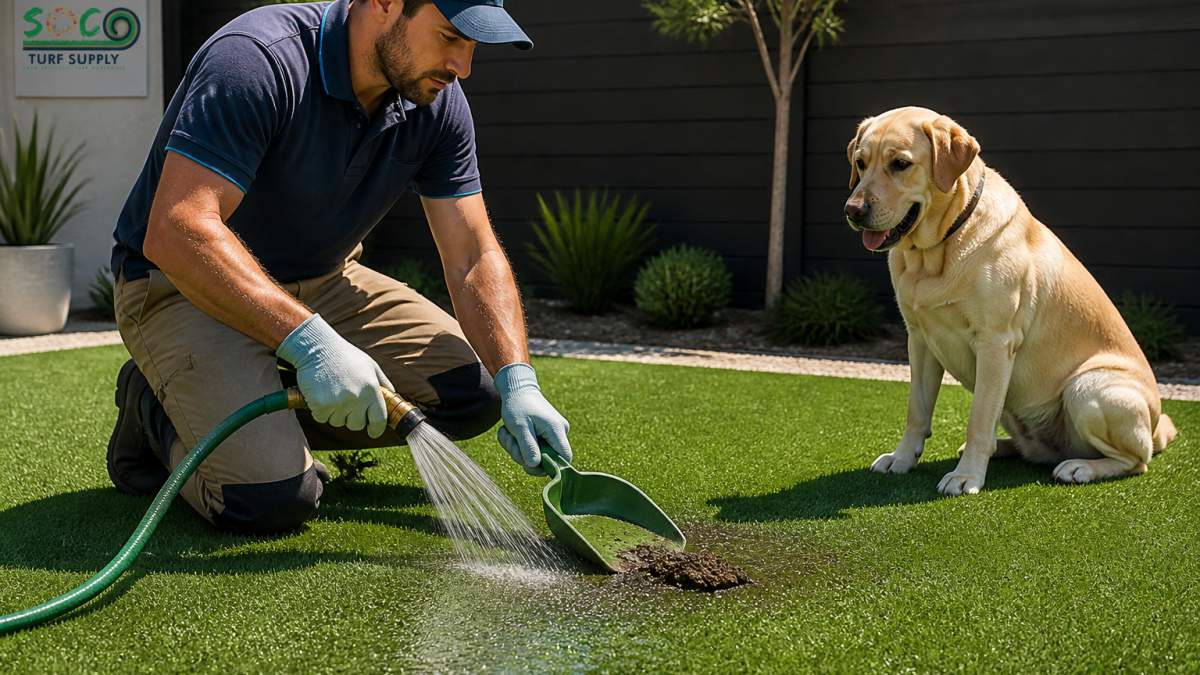
Scoop solids first, then rake up leaves and loose fibers. Bag the waste and seal it. This step matters more than people think: scrubbing over solid waste just grinds it into the infill.
Step 2: Rinse and Flush the Infill
Spray the area with a gentle stream, working from high ground toward the drainage slope. Let water run through the backing. If puddles sit for more than a few minutes, your drainage is clogged and needs attention.
Step 3: Apply a Pet-Safe Cleaner and Scrub
Dilute the cleaner per the label, apply with a pump sprayer, and let it dwell for the stated time. Then scrub in small circles with a stiff brush. Focus on high-traffic lanes and potty corners.
Step 4: Rinse Thoroughly and Let It Dry
Rinse until the runoff runs clear. Skip this and soap residue traps dirt and odor. Let the turf dry fully before pets return, usually a few hours in West Texas sun.
| Step | Time | Frequency |
|---|---|---|
| Remove solids | 5 min | Daily |
| Rinse infill | 10 min | Weekly |
| Cleaner and scrub | 15 min | Weekly to monthly |
| Full rinse and dry | 10 min | Same day as cleaning |
How to Remove Dog Urine Smell from Artificial Turf
Urine smell comes from bacteria feeding on waste trapped in the infill, not from the turf blades. To remove dog urine smell from artificial turf, flush the spot with water, treat it with an enzyme cleaner, and let it dry completely. Enzymes eat the bacteria; soap only masks them.
For fresh spots:
- Blot up liquid with a towel before it soaks in
- Flood the spot with water to push urine through the backing
- Apply enzyme cleaner and leave it to work
- Rinse again after the dwell time
For old, set-in odor, a 50/50 white vinegar and water spray helps break the smell before the enzyme treatment. In Midland’s dry heat, urine concentrates fast, so weekly flushing beats monthly deep cleans.
Never seal or cover damp turf. Trapped moisture under a hot cover breeds bacteria and turns a small smell into a whole-yard problem.
How to Clean Dog Poop Off Artificial Grass
To clean dog poop off artificial grass, scoop it while fresh, rinse the spot, and disinfect with a pet-safe product. Fresh waste lifts cleanly. Left too long, it smears into the fibers and the infill.
Follow this order:
- Scoop with a plastic tool, not metal
- Rinse the spot with a hose
- Apply pet-safe cleaner and scrub lightly
- Rinse again and let it dry
Hard or dried waste softens with a short soak first. Then lift it with a scoop instead of scrubbing, which pushes residue deeper. Keep pets off the area until it’s dry.
Choosing the Best Artificial Turf Cleaner for Pets
The best artificial turf cleaner for pets is an enzyme-based formula labeled pet-safe and non-toxic. Enzymes break down urine and waste at the source, while mild surfactants lift dirt without harming the backing.
What to look for:
- Enzyme base: digests organic waste instead of masking it
- Pet-safe label: non-toxic once dry
- No bleach: bleach weakens backing and stitching
- Neutral pH: harsh formulas fade color over time
A simple DIY mix of mild dish soap and warm water works for light dirt. Save the enzyme products for odor and waste. Buy concentrates and dilute them yourself; it costs less per cleaning and stores longer.
How Often to Clean Pet Turf
Clean pet turf weekly for light use and two to three times a week for heavy use. Daily scooping is non-negotiable. How often you deep clean depends on how many pets you have and how hot it gets.
| Use Level | Scoop | Rinse | Deep Clean |
|---|---|---|---|
| One small dog | Daily | Weekly | Monthly |
| Two or more dogs | Daily | Twice weekly | Every two weeks |
| Heavy traffic | Daily | Every other day | Weekly |
Summer speeds everything up. Heat and sun bake waste into the fibers faster, so add a midweek rinse in July and August. Check with local pet waste guidance from EPA pet waste guidance for safe disposal.
Tips for Stain Removal and Long-Term Maintenance
Stain removal starts before the stain sets. Blot, don’t scrub, and treat within the hour. For tough marks, a soft brush and diluted vinegar lift most messes without harming the turf.
Long-term care keeps cleaning easy:
- Brush against the grain monthly to lift matted fibers
- Top up infill in worn lanes once a year
- Keep drainage channels clear of debris
- Rinse the whole yard after big rain to flush residue
- Store cleaners out of freeze and direct sun
For product specs and safety details, check the Consumer Product Safety Commission on cleaner labels. If you’re weighing turf options for a pet area, our team at Soco Turf Supply can walk you through UV-tested, performance-rated blends built to handle daily pet traffic.
The single biggest factor in pet turf odor is drainage. Turf that drains well and gets flushed weekly rarely smells, no matter how many dogs use it.
Conclusion
Pet turf that smells is almost always a drainage or flushing problem, not a turf problem. Build a simple kit, scoop daily, flush weekly, and use an enzyme cleaner on odor spots. That routine keeps artificial grass clean and safe for years.
If you’re planning a pet-friendly install or need materials that hold up to daily use, Soco Turf Supply offers warehouse-direct pricing, UV-tested turf blends, and expert guidance on every project. We serve homeowners, contractors, and property managers across Midland and the Permian Basin. Get an estimate and build a yard that stays clean and low-maintenance.
Frequently Asked Questions
How do you clean artificial turf after a dog urinates on it?
Flush the area with water as soon as possible to dilute the urine. For a deeper clean, apply a pet-safe enzyme cleaner, let it sit for 10-15 minutes, then rinse thoroughly. In hot, dry climates like the Permian Basin, urine can concentrate quickly, so rinse more often. Avoid harsh chemicals that can damage turf fibers. If odor lingers, a second application of enzyme cleaner usually helps. Regular rinsing is the key to preventing buildup.
Can you use vinegar to clean pet turf?
White vinegar is a safe, natural option for cleaning pet turf. Mix one part vinegar with one part water and apply to affected areas. Let it sit for a few minutes, then rinse well. Vinegar helps neutralize odors and break down stains, but it may not fully eliminate strong urine smells. For persistent odors, use an enzyme-based cleaner designed for pet turf. Always test a small area first to ensure the vinegar solution doesn’t affect the turf color.
Can you pressure wash artificial turf?
Pressure washing is not recommended for artificial turf. The high pressure can damage fibers, displace infill, and void warranties. Instead, use a garden hose with a spray nozzle for rinsing. For stubborn stains, a soft-bristle brush and a pet-safe cleaner work better. If you need to deep clean, a low-pressure setting on a pressure washer may be safe, but keep the nozzle at least 12 inches away and use a wide fan tip. Always check your turf manufacturer’s guidelines first.
What is the best way to deep clean artificial turf for pets?
Deep cleaning pet turf involves removing solid waste, rinsing the infill, applying an enzyme cleaner, scrubbing with a soft brush, and rinsing thoroughly. For a more thorough clean, use a turf deodorizer or a mixture of mild dish soap and water. In areas with heavy pet use, consider a professional deep clean once a year. Regular maintenance, like weekly rinsing and monthly enzyme treatments, reduces the need for aggressive deep cleaning.