
Last Updated: November 12, 2026
Quick Summary
The main grass alternatives for Midland backyards are artificial turf and nonliving surfaces such as gravel, stone, pavers and mulch. They need little or no irrigation, and none need mowing or fertilizer. Artificial turf costs more upfront, while gravel and stone need raking and weed control.
- Artificial turf needs no daily watering and only occasional rinsing and infill top-off.
- Gravel and stone need raking and weed barrier upkeep but no mowing or irrigation.
- Pavers need occasional sweeping and joint sand refresh.
- Mulch beds need annual top-off because the mulch breaks down.
- Proper drainage and base preparation matter more than the product alone.
Table of Contents
- Why Homeowners Are Replacing Natural Grass in Midland
- Grass Alternatives Compared: Cost, Water Use and Maintenance
- Artificial Turf and Nonliving Surfaces for Midland Yards
- Drought-Tolerant Ground Covers and Native Plants
- Choosing Grass Alternatives for Dogs and Children
- What to Replace Grass With in a Backyard: Shade, Sun and Soil
- Booking Your Turf Estimate From Soco Turf Supply
- Frequently Asked Questions
Why Homeowners Are Replacing Natural Grass in Midland
Midland homeowners are rethinking the traditional lawn. Between hot summers, limited rainfall and the cost of keeping a thirsty turf green, many are looking at alternatives to natural grass for Midland backyards. At Soco Turf Supply, we work with homeowners, contractors and property managers who want a yard that looks good without constant watering and mowing. This guide walks through the practical options and how to choose the right fit for your space.
Natural grass demands water, fertilizer, mowing and regular attention. In a region where the sun is intense for much of the year and soils can be dry and compacted, those demands add up quickly. Many homeowners find that the yard they wanted is not the yard they are maintaining.
The main drivers are straightforward:
- Water use: Irrigation is a significant ongoing cost of a natural lawn.
- Time: Mowing, edging and weed control take weekends that many households would rather spend elsewhere.
- Usability: Some lawns are worn bare by pets, play or heavy foot traffic.
Understanding these pressures makes the choice easier. The question is rarely “grass or no grass.” It is which replacement suits how you actually use the space.
Grass Alternatives Compared: Cost, Water Use and Maintenance
Grass alternatives for a Midland backyard fall into two practical groups the site owner works with: artificial turf and nonliving hardscape such as gravel, decorative stone, pavers and mulch. Each trades upfront cost against long-term upkeep in a different way, and the gap between them is widest in water use and heat behavior rather than in purchase price alone.
| Option | Upfront Cost Structure | Water Needs | Ongoing Maintenance | Best For |
|---|---|---|---|---|
| Artificial turf | Higher upfront: product, base, infill, edge restraint, labor | None for daily use; occasional rinsing | Rinsing, debris removal, brushing, infill top-off every few years | Play areas, pet zones, visible low-water yards |
| Gravel or decorative stone | Varies: aggregate, weed barrier, edging, delivery | None | Raking, weed barrier upkeep, occasional replenishment | Heat-heavy, low-traffic zones, paths, utility strips |
| Pavers or hardscape | Varies: base prep, bedding, units, labor | None | Occasional sweeping, joint sand refresh | Patios, walkways, high-traffic outdoor living |
| Mulch beds | Varies: mulch, delivery, labor | None | Annual top-off as mulch breaks down | Tree rings, borders, low-traffic beds |
Cost depends on several variables, including square footage, site preparation, delivery distance and project timing. Site conditions such as soil type and access for delivery can also affect the scope of work. For current pricing on turf and materials, request a quote from Soco Turf Supply, where costs depend on quantity, delivery and project timing.
Water use is where the gap is clearest. For a closer look at how to avoid middleman markups when buying turf materials, see our Avoiding Middleman Turf Markup Guide. Natural grass needs regular irrigation to stay green through a Midland summer. Artificial turf, gravel, pavers and mulch need almost none for daily upkeep. The real water question for a nonliving surface is drainage, not irrigation: a properly built turf base and a properly sloped gravel bed both shed rainfall rather than holding it. Local water-use estimates vary with your irrigation system and rainfall, so treat any figure you see as a starting point and confirm it against your own usage.
Maintenance is the trade-off to weigh. Artificial turf is largely a one-time setup with periodic cleaning and infill top-off. Gravel and stone need raking and weed control but almost nothing else. Pavers need occasional sweeping and joint sand refresh. Mulch needs annual replenishment because it breaks down. None of these options require mowing, edging or fertilizer.
Watch out: the cheapest upfront option is not always the lowest-cost option over time.
Artificial Turf and Nonliving Surfaces for Midland Yards
Artificial turf is a common replacement for natural grass, and it can perform well in heat and dust. Quality varies, so look for UV-stabilized fibers that resist fading and brittleness. Our best artificial turf for dogs guide compares turf options built for pet areas. UV-tested and performance-rated blends are designed to resist fading.
Drainage is the detail most often overlooked. A well-installed base lets water move through the turf, which prevents pooling and odor. Base preparation affects how well a turf installation performs, so installation matters as much as the product.
Consider these points before you commit:
- Choose infill and backing appropriate for your use, especially in pet areas.
- Plan for dust and heat. Turf surfaces can get hot in direct afternoon sun.
- Expect periodic rinsing and debris removal rather than mowing.
Nonliving surfaces such as decorative gravel, stone and pavers suit areas with heavy foot traffic, outdoor living spaces or spots where nothing will grow well. They shed heat differently than turf, so position them with shade and walking routes in mind.
Drought-Tolerant Ground Covers and Native Plants
For Midland backyards, the most reliable low-water living look is not a planted bed at all but a well-built nonliving surface that reads as intentional ground cover: stabilized decomposed granite, crushed granite, river rock, and mulch. These surfaces need no irrigation after installation, hold up to West Texas sun and wind, and can be edged and shaped to mimic the soft lines of a planted border without the establishment watering a living ground cover requires.
Stabilized decomposed granite can serve as a walkable surface in this category. A binder mixed into the aggregate locks the surface so it resists raking out and wind erosion, and it can be installed over a compacted base with edging to hold the edge. Crushed granite and river rock work better in borders, utility strips and drainage swales where foot traffic is light. Mulch suits tree rings and low-traffic beds but breaks down and needs annual top-off.
Establishment is the critical stage for any of these surfaces, just as it is for a living ground cover. The base prep determines whether the surface stays put through a monsoon downpour or a spring wind event. Plan on a compacted subgrade, a weed barrier where appropriate, and edging that is set deep enough to hold the material. Installation in fall or early spring avoids working in peak heat and gives the surface a full season to settle before summer.
A few practical notes:
- Match surface to traffic. Stabilized decomposed granite handles foot traffic; loose gravel and mulch do not.
- Check drainage. A gravel bed that ponds will hold water against the house foundation, so slope it away from structures.
- Wind matters in Midland. Lighter aggregate and dry mulch can migrate in high wind, so choose gradation and edging accordingly.
- Color affects heat. Light-colored stone reflects more heat than dark mulch, which matters near patios and play areas.
These surfaces are a low-maintenance system rather than a no-maintenance one. They need occasional raking, weed control along edges and replenishment where material migrates, but they do not need mowing, edging, fertilizer or irrigation.
Watch out: a gravel or granite bed installed without edging will spread into turf, walkways and drainage channels within a season, and correcting it costs more than the edging would have.
Choosing Grass Alternatives for Dogs and Children
Pets and children change the decision. A yard used for play needs a surface that handles running, digging and repeated traffic without becoming a mess. Artificial turf is often the most practical choice for these spaces, since it avoids the bare, muddy patches that natural grass develops under heavy use.
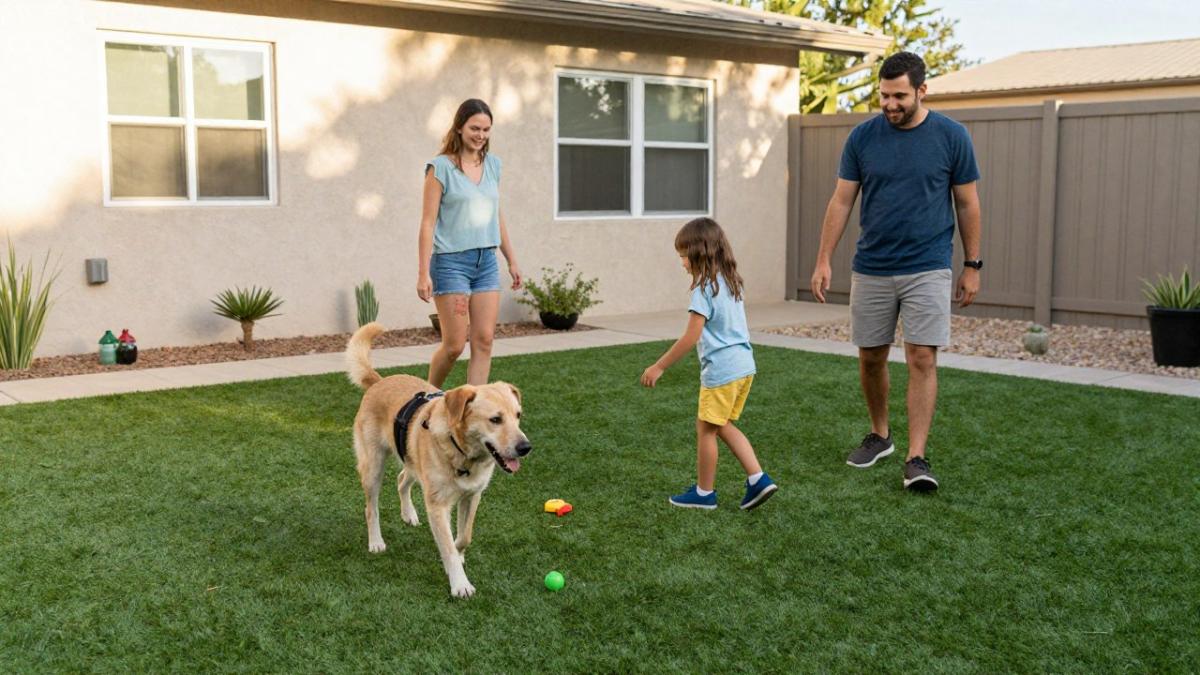
For dogs, the key concerns are drainage, rinsing and odor control. Turf designed for pet areas includes a backing and infill that drain well and can be hosed down regularly. Learn how to clean pet turf to keep it hygienic. Native ground covers are generally less suited to dog runs, since they can be trampled, so reserve them for areas dogs do not frequently use.
For children’s play areas, look for turf that is comfortable underfoot and cool enough to use during the day. Test surfaces in direct sun before deciding, since heat is the main comfort issue in Midland summers. Keep play zones clear of sharp edges and loose debris.
What to Replace Grass With in a Backyard: Shade, Sun and Soil
The right replacement depends on three conditions: how much sun the area gets, what the soil is like and what the space is for. Start by mapping your yard before choosing materials.
- Full sun: Artificial turf, gravel, and sun-tolerant native plants and ornamental grasses perform well. Expect more heat reflection from hardscape.
- Partial shade: Some native ground covers and shade-tolerant plantings can establish under trees or along north-facing walls.
- Heavy shade: Mulch beds or shade-tolerant plantings may work better than turf, which can struggle without enough light for certain setups.
Soil matters as well. Compacted or poorly draining soil limits what will establish and can cause standing water under turf. A simple test is to dig a small hole, fill it with water and see how fast it drains. Slow drainage points toward better base preparation or a plant list suited to heavier ground.
Many yards combine approaches. A turf play area, a native planting bed along the fence and a gravel path between them can meet several needs at once while keeping total water use low.
Booking Your Turf Estimate From Soco Turf Supply
Choosing the right replacement is the first step. The next is getting accurate quantities and a plan that fits your site. Soco Turf Supply offers warehouse-direct turf, professional installation materials and equipment rentals, with expert guidance on every project, whether you are covering a single backyard or planning a larger commercial job.
Request an estimate to get current pricing based on your yard size, product choice and delivery timing. Get Estimate to start your backyard project. Our team can help you compare options against your sun exposure, soil and intended use, so the plan you choose matches the yard you actually have. Get Estimate.
Frequently Asked Questions
What can I use instead of natural grass in a Midland backyard?
Common options include artificial turf, decomposed granite or gravel, mulch beds, decorative stone, and drought-tolerant ground covers and native plants suited to West Texas. Each has trade-offs in heat, drainage, dust and foot-traffic tolerance. Artificial turf can offer a lawn-like look and usability, while native plantings and gravel can reduce irrigation. Pricing depends on quantity, site preparation and delivery, so request a quote from Soco Turf Supply for current figures.
Is artificial turf a good alternative to natural grass in Midland?
Artificial turf works well for Midland yards because it needs no irrigation to stay green through the dry summer and it tolerates heavy use from children and pets. UV-rated blends are designed to resist fading in intense sun. Good base preparation and drainage matter most, since poor installation causes pooling and odor. Ask for product documentation of UV testing and performance ratings before you buy.
Are there grass alternatives that are safe for dogs?
Dogs do best on surfaces that drain well, stay cool enough to lie on, and do not hold odor. Artificial turf designed for pet areas, with proper drainage, is one option to consider. Gravel or decomposed granite suits digging and running areas but can be hard on paws. Avoid plantings that are toxic if chewed, and check with a veterinarian about specific plants before installing them.
What low-maintenance backyard ground cover works in West Texas heat?
Low-maintenance ground covers for West Texas include native and drought-tolerant perennials and self-seeding plants that handle full sun and limited water once established. Establishment watering is needed for the first season, after which irrigation can be reduced substantially. Plant choice depends on sun exposure, soil and foot traffic, so match the species to the spot rather than to a generic list.
