Table of Contents
- Why Preventing Artificial Turf Heat Damage Matters in Midland, TX
- Signs of Melted Artificial Grass to Catch Early
- Reflected Heat Damage to Artificial Grass From Windows and Metal
- How to Cool Artificial Turf During Peak Summer Heat
- Artificial Turf Heat-Resistant Materials Worth Specifying
- Common Mistakes That Make Preventing Artificial Turf Heat Damage Harder
- Conclusion
- Frequently Asked Questions
Last Updated: October 5, 2026
Why Preventing Artificial Turf Heat Damage Matters in Midland, TX
Preventing artificial turf heat damage is the difference between a lawn that looks new after five summers and one that starts curling at the edges by August. In Midland, TX, where summer afternoons push past 100°F and the sun beats down for months, synthetic grass takes a beating that homeowners in milder climates never see. At Soco Turf Supply, we work with Permian Basin homeowners and contractors every week who are dealing with this exact problem.
Here’s what most guides get wrong: they treat heat damage as a cosmetic issue. It isn’t. Once turf fibers start to soften and deform, the damage is permanent. You can’t iron it out or stretch it back.
Below, we’ll walk through the warning signs, the causes, and the fixes that actually hold up in West Texas heat.
Signs of Melted Artificial Grass to Catch Early
The first sign of melted artificial grass is usually a shiny, flattened patch where fibers have lost their texture. Catch it early and you may save the section. Miss it, and you’re replacing infill and possibly turf.
Watch for these warning signs:
- Glossy or reflective patches where fibers look slick instead of matte
- Flattened, matted blades that won’t spring back when you brush them
- Curled or fused fiber tips that feel stiff or crunchy
- Warped seams where two turf rolls meet
- A plastic smell on hot afternoons, which means the backing is heating up
- Visible footprints that stay pressed into the surface
That last one is the tell most people ignore. Normal turf springs back within seconds. Turf that holds a footprint is telling you the fibers have softened past their safe limit.
Never walk barefoot on turf showing melt signs during peak heat. Softened fibers can reach temperatures hot enough to cause contact burns, especially on children and pets.
Reflected Heat Damage to Artificial Grass From Windows and Metal
Reflected heat damage to artificial grass is the most misdiagnosed problem we see. Homeowners blame the turf, when the real culprit is a low-E window or a metal fence panel bouncing concentrated sunlight onto one spot.
Here’s how it works. Energy-efficient windows reflect a large share of solar energy back outside. That reflected beam lands on your turf like a magnifying glass. Metal siding, dark fences, and even some patio covers do the same thing.
The damage pattern gives it away:
| Damage Pattern | Likely Cause | Fix |
|---|---|---|
| Straight-line melt stripe | Low-E window reflection | Add shade screen or deflector |
| Concentrated oval burn spot | Curved metal surface | Move or shield the reflective object |
| Melt along fence line | Metal fence panel | Replace with non-reflective material |
| Scattered hot spots | Multiple window angles | Landscape screening or awning |
If your damage is in a straight line, it’s reflection. If it’s random and widespread, it’s ambient heat. That distinction decides how you fix it.
How to Cool Artificial Turf During Peak Summer Heat
Learning how to cool artificial turf starts with water. A quick hose-down during the hottest part of the day drops surface temperature fast, and it’s the simplest tool you have.
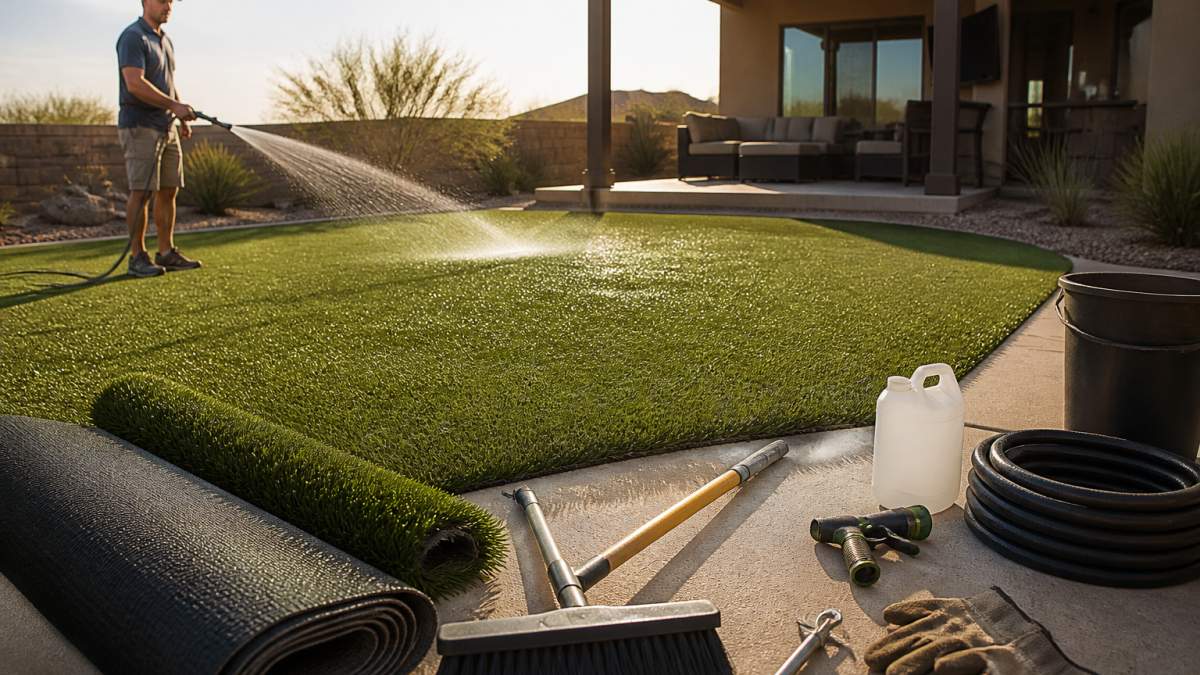
Here’s what works, ranked by effort:
- Hose it down. A light soak in late afternoon cools the surface for a while.
- Add shade. A shade sail or awning blocks direct sun on the hottest zones.
- Install a misting line. Low-flow misters keep surface temps down through the day.
- Switch infill. Some infill materials hold far less heat than others.
- Water before use. If kids or pets use the lawn, cool it first.
For a full breakdown of surface temperature ranges and safety guidance, the Consumer Product Safety Commission publishes heat safety resources worth reviewing.
Water in the late afternoon, not midday. Midday watering evaporates before it does much good, and you’ll use more water for the same cooling effect.
Artificial Turf Heat-Resistant Materials Worth Specifying
Artificial turf heat-resistant materials come down to three things: fiber shape, backing, and infill. Get all three right and your turf handles Midland summers far better.
Fiber shape. Curled or textured fibers (often called memory fiber) bounce back after foot traffic and resist matting better than flat blades. They also handle heat deformation better.
Backing. A quality backing holds its shape when temperatures climb. Thin, cheap backing is where warping starts.
Infill. This is the biggest lever. Some infill absorbs and holds heat. Others stay noticeably cooler. If heat is your main concern, ask specifically about infill options before you buy.
When you’re comparing products, ask for documentation, not marketing claims. Reputable suppliers provide UV testing and performance ratings you can review. Soco Turf Supply stocks UV-tested, performance-rated turf blends and will walk you through the specs before you commit.
The single biggest factor in heat resistance isn’t the fiber, it’s the infill. Choose the wrong infill and even premium turf runs hot.
Common Mistakes That Make Preventing Artificial Turf Heat Damage Harder
Most heat damage we see traces back to a handful of avoidable mistakes. Fix these and you’ll prevent the bulk of problems.
- Ignoring reflection sources. You cool the turf but never address the window or metal panel causing the burn.
- Choosing infill on price alone. The cheapest option often runs hottest.
- Skipping shade planning. A little afternoon shade changes everything.
- Using dark-colored accessories. Dark borders, edging, and furniture absorb heat and radiate it onto the turf.
- Never watering. Turf needs occasional cooling in extreme heat, even though it’s synthetic.
- Buying without documentation. If a supplier can’t show UV and performance testing, walk away.
If you’re searching for turf near me in Midland, ask the supplier directly about heat performance. A good supplier answers without hesitation. A bad one changes the subject.
Conclusion
Midland summers are hard on synthetic grass, but heat damage is preventable with the right materials and a few smart habits. Check for reflection sources, choose infill for heat performance, and cool the surface when temperatures peak.
Soco Turf Supply serves homeowners and contractors across the Permian Basin with warehouse-direct pricing, UV-tested turf blends, and full material and equipment supply. Our team guides every project from product selection through install.
Get an estimate from Soco Turf Supply and build a lawn that holds up to West Texas heat.
Frequently Asked Questions
Can artificial turf melt in direct sunlight?
Yes, but only when surface temperatures climb far beyond normal summer heat. Standard turf handles typical Midland, TX summers without melting. The real risk comes from concentrated heat sources: low-E window reflections, metal edging, or dark objects sitting on the surface. Most melting reports trace back to reflected heat rather than direct sun alone, which is why placement and material choice matter more than sun exposure by itself.
How can I keep artificial turf cooler in hot weather?
Rinse the surface with water during the hottest part of the day, ideally late afternoon when heat has built up. Water pulls surface temperature down quickly and evaporates without leaving standing moisture. Adding shade from a pergola or shade sail over the hottest zones also helps. For pet areas, a light rinse after use keeps both temperature and odor in check. These steps are simple but they make a noticeable difference during July and August.
How can I tell whether artificial turf has heat damage?
Look for three things: shiny or glossy patches where fibers have fused, flattened blades that no longer spring back when brushed, and discolored or faded zones that stand out from surrounding turf. Heat damage usually appears in isolated spots near windows or metal edges rather than across the whole yard. Once fibers fuse, the damage is permanent, so catching these signs early lets you adjust shade or cooling before more of the surface is affected.
Which artificial turf materials are more heat resistant?
Turf with a higher face weight and UV-stabilized fibers holds up better under sustained heat. Thatch and backing layers also matter: a quality backing keeps the surface from trapping heat against the base. When comparing options, ask for UV testing documentation and performance ratings rather than relying on marketing claims. Soco Turf Supply stocks UV-tested, performance-rated blends and can walk you through which specification fits your site.