Last Updated: November 2, 2026
Quick Summary
Artificial turf maintenance is the scheduled care that keeps synthetic grass safe, green, and under warranty, and it is the cheapest way a property manager can protect a landscaping asset. Build a written schedule around weekly and monthly routine tasks, quarterly deep cleaning and inspections, and seasonal work tied to Midland’s heat, dust, and storm cycles.
- Weekly work includes blowing off dust and debris, brushing high-traffic paths, and checking drains after rain.
- Quarterly deep cleaning covers power brushing, a drainage flow test, seam checks, and a photo log.
- Pick up pet waste daily in pet areas and rinse with water and a pet-safe cleaner.
- Use synthetic-bristle tools, since metal rakes and stiff wire brushes can fray turf fibers.
- Keep weekly light tasks in-house and outsource quarterly deep cleaning, inspections, and infill replenishment.
Table of Contents
- Why Artificial Turf Maintenance Protects Property Value
- Your Artificial Turf Maintenance Schedule by Season
- The Best Tools for Artificial Grass Maintenance
- Debris Removal, Stain Treatment, and Pet Waste Management
- Artificial Turf Infill Replenishment and Fiber Grooming
- Commercial Artificial Turf Cleaning Services vs. In-House Crews
- Adapting Maintenance for West Texas Heat, Dust, and Drainage
- Request a Turf Maintenance Supply Quote for Your Properties
- Frequently Asked Questions
Why Artificial Turf Maintenance Protects Property Value
Artificial turf maintenance is the scheduled care that keeps synthetic grass safe, green, and under warranty, and it is the cheapest way a property manager can protect a landscaping asset.
The math is simple. A small monthly effort keeps fibers upright, drains open, and stains from setting. Skip it, and you face matted sections, standing water, and complaints from tenants.
Your Artificial Turf Maintenance Schedule by Season
An artificial turf maintenance schedule is a written plan that assigns each cleaning and inspection task to a week, a season, or a quarter. For a property manager, the schedule is also a budget and liability document: it shows owners and HOA boards that the asset is being cared for on a defined cadence, and it creates the paper trail needed for warranty claims.
Weekly and Monthly Tasks for Common Areas
Weekly work is light and fast, and most of it can stay with an in-house crew:
- Blow off dust, leaves, and litter before it works into the pile
- Rake or brush high-traffic paths to keep fibers upright
- Check drains and low spots after rain
- Spot-clean spills before they set
- Pick up pet waste daily in pet areas, not weekly
Monthly, add a deeper pass. Rinse heavy-use zones with low-pressure water, inspect seams and edges for lifting, check infill depth at the edges of walkways where it migrates, and log any damage with photos. Dust from wind events can settle into the pile, so monthly rinsing is a useful habit in dusty climates.
Quarterly Deep Cleaning and Inspections
Quarterly service is where you catch problems early and where the written record pays off. A deep cleaning and inspection covers:
- Power brushing to lift matted fibers and restore pile height
- A full rinse of the surface and a flow test of drainage systems
- Seam, edge, and sub-base checks, including perimeter attachment
- Infill depth and distribution review against the manufacturer’s spec
- A photo log and a short written report per site
Document each visit. A written record supports warranty claims, defends against slip-and-fall complaints, and gives you a defensible basis for next year’s budget request.
Seasonal Calendar for Midland Properties
Midland’s climate compresses the maintenance year into distinct phases. A workable calendar looks like this:
- Spring (March-May): Wind and dust season. Increase blowing and rinsing frequency, inspect perimeter edges for lifting after high-wind events, and schedule the first quarterly deep clean before summer traffic.
- Summer (June-August): Peak UV and heat. Brush high-traffic zones more often, rinse in the early morning to cool the surface, and watch for fiber softening or fading in full-sun areas. Surface temperatures in direct sun can climb well above air temperature, so scheduling crew work for cooler hours is a sensible precaution.
- Fall (September-November): Storm season. Inspect drainage before and after significant rain, clear debris from drains, and schedule the second deep clean. This is also the right window to top off infill before winter.
- Winter (December-February): Lower traffic but not zero work. Continue weekly debris removal, check for freeze-related seam damage after hard freezes, and use the quieter months to audit records and plan the next budget cycle.
Two seasonal tasks are easy to skip and expensive to skip: pre-storm drain inspection and post-wind perimeter checks. Both are cheap when done on schedule and costly when deferred.
Watch out: a schedule that only lists tasks without owners and dates does not survive a busy quarter. Assign each line to a named role, in-house lead, vendor, or both, and put the dates on a shared calendar so the quarterly deep clean does not quietly slip.
The Best Tools for Artificial Grass Maintenance
The right tools make artificial grass maintenance faster and safer for the surface. You do not need a large kit to start. Here are the basics we recommend:
| Tool | Best For | Frequency |
|---|---|---|
| Leaf blower | Loose dust, leaves, litter | Weekly |
| Turf rake or power broom | Lifting matted fibers | Monthly to quarterly |
| Hose or low-pressure sprayer | Rinsing surface and drains | Monthly |
| Stiff brush and mild soap | Spot stain removal | As needed |
| Infill spreader | Replenishing infill | Quarterly |
A common mistake is using a metal rake or a stiff wire brush. Both can pull and fray turf fibers. Synthetic-bristle tools are the safer choice for turf fibers.
Debris Removal, Stain Treatment, and Pet Waste Management
Debris removal comes first in any cleaning routine, because dirt and organic matter break down fibers and clog drains over time.
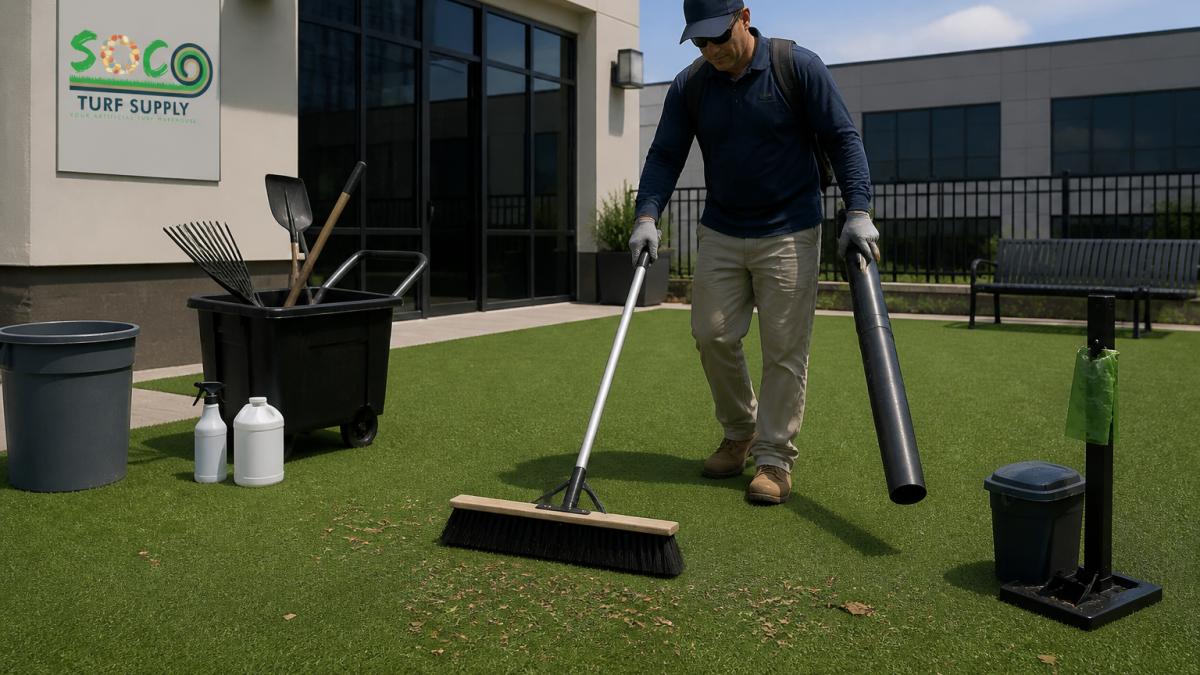
Start with a leaf blower for loose material. Then use a turf rake to lift debris trapped in the pile.
Stain treatment depends on the cause:
- Food and drink: mild soap and water, then rinse
- Oil or grease: a degreaser made for synthetic surfaces
- Paint or gum: follow the manufacturer’s removal guidance
Pet waste management needs its own routine. Pick up solids right away. Rinse the area with water and a pet-safe cleaner.
For a step-by-step method your crew can follow, see our guide on how to clean pet turf.
Artificial Turf Infill Replenishment and Fiber Grooming
Infill settles and shifts over time, especially in high-traffic areas. When the pile looks flat or the fibers lean, it is time to groom.
The type of infill matters for drainage. Our guide to the best turf infill for drainage covers which infill types perform best.
Watch out: overfilling can trap moisture and cause odors, so match the depth to the manufacturer’s spec.
Commercial Artificial Turf Cleaning Services vs. In-House Crews
Commercial artificial turf cleaning services are providers that handle deep cleaning and inspection work. In-house crews typically handle routine debris removal and spot cleaning between visits. The decision is less about which is better and more about which tasks belong in each bucket for your portfolio.
Which is better? It depends on your portfolio:
- In-house works when you have a few small sites and a crew already on site with blowers and basic tools
- Outsourced works when you manage many sites, lack power-broom equipment, or need documented inspections for warranty and liability purposes
- A blended model often wins: keep weekly light tasks in-house and bring in a service for quarterly deep cleaning, inspections, and infill replenishment
Scoping the Work Before You Call a Vendor
Most vendor problems start with a vague scope. Before you request quotes, define the work in writing:
- Which surfaces are covered (common areas, playgrounds, pet areas, rooftop decks) and their square footage
- Task frequency by surface type, not a single blanket cadence
- Whether infill replenishment and materials are included or billed separately
- Reporting format and photo documentation per visit
- Response expectations for spills, storm damage, and drainage failures
A vendor quoting a single per-visit rate without a written scope is a vendor you will be renegotiating with in six months.
Vendor Vetting Checklist for Property Managers
Use a standardized checklist so every bid is compared on the same terms:
- Proof of turf-specific equipment (power broom, low-pressure rinse, infill spreader)
- Insurance and safety documentation, including workers’ compensation
- Written scope of work tied to your surface list and frequencies
- Sample inspection report and photo log from a comparable commercial site
- References from similar commercial or HOA properties
- Clear plan for pet areas, high-traffic zones, and storm response
- Confirmation that cleaning methods match the turf manufacturer’s warranty requirements
That last item matters more than most managers realize. Aggressive pressure washing, metal rakes, or the wrong cleaning chemicals can void a turf warranty, and the warranty claim will land on the property manager’s desk, not the vendor’s.
Folding Turf Care Into Existing Landscape Contracts
Many property managers already have a landscape service agreement in place. Adding turf care to that agreement is often cheaper and simpler than a standalone contract, but only if the scope is written correctly.
Watch out: bundling turf care into a general landscape contract without turf-specific line items is how maintenance quietly becomes “blow and go”, the surface gets debris removal but never brushing, infill checks, or documented inspections.
Justifying the Spend to Owners and HOA Boards
Turf maintenance is an asset-protection line item, not a cosmetic one. When you present it to owners or an HOA board, frame it in terms they already track:
- Replacement avoidance: a full turf replacement is a major capital expense; routine maintenance is a small recurring line that defers it
- Warranty compliance: most manufacturers require documented maintenance, and missing records can void coverage
- Liability reduction: documented inspections and cleaning support defensible positions on slip-and-fall and sanitation complaints
- Curb appeal and retention: matted, dusty, or odorous turf drives tenant complaints and turnover
A simple one-page annual maintenance plan, tasks, frequencies, responsible party, and reporting, is usually enough to get budget approval. The plan also gives you a benchmark to compare vendor bids against, which keeps pricing honest year over year.
Adapting Maintenance for West Texas Heat, Dust, and Drainage
West Texas heat, dust, and drainage shape every part of artificial turf maintenance in Midland.
Adjust your routine for local conditions:
- Rinse more often to clear dust from the pile
- Brush high-traffic areas more frequently
- Inspect drainage before and after storm season
- Use UV-stabilized products rated for intense sun
Heat damage is a real risk. Our guide on preventing artificial turf heat damage in Midland, TX explains how to cool and protect the surface.
When drainage problems show up, fix them before the next storm. See our practical guide on how to fix backyard drainage for solutions that apply to commercial sites too.
Request a Turf Maintenance Supply Quote for Your Properties
Good artificial turf maintenance for property managers comes down to a simple system: a written schedule, the right tools, and a reliable supply of infill and cleaning materials.
Soco Turf Supply offers warehouse-direct turf, installation materials, and equipment rentals for property managers.
Ready to stock up on maintenance supplies or plan your next project? Get an estimate for your properties.
Frequently Asked Questions
What maintenance is required for artificial turf?
Commercial artificial turf maintenance comes down to five recurring jobs: removing debris with a leaf blower or turf rake, brushing fibers upright, spot-treating stains, managing pet waste, and replenishing infill as it settles. Add quarterly deep cleaning and drainage checks. A written artificial turf maintenance schedule keeps crews consistent across multiple sites and prevents small issues, like compacted infill or clogged drainage, from turning into replacement costs.
What is the recommended maintenance schedule for commercial artificial turf?
Most property managers run weekly debris removal and spot cleaning, monthly brushing of high-traffic areas, and quarterly deep cleaning with sanitization and drainage inspection. Infill replenishment is usually checked twice a year. In West Texas, dust and heat push brushing and debris removal to a higher frequency. Document each task by date and site so you can prove preventative maintenance was performed and adjust the schedule based on actual wear.
How do property managers handle pet waste on commercial artificial turf areas?
Remove solid waste immediately with a bag and scoop, then rinse the area with water and apply a pet-safe enzyme or biocide product designed for synthetic turf. Brush the fibers after rinsing so residue does not mat. In pet areas, confirm the sub-base and drainage systems are rated for frequent washing. Post signage for tenants and schedule extra inspections in pet relief zones to control odor before it becomes a complaint.
How much does turf maintenance cost for a commercial property?
Costs depend on square footage, site count, traffic level, and whether you use in-house crews or commercial artificial turf cleaning services. Pricing also varies by tool and supply needs, such as infill, biocide, and replacement brushes. Soco Turf Supply does not publish fixed prices because every property differs; request a quote with your site dimensions and maintenance scope for current warehouse-direct pricing on turf, materials, and equipment rentals.
