Table of Contents
- Why Desert Turf Fails (and What Lasts Instead)
- Artificial Turf Heat Resistance: What Actually Matters
- Best Artificial Turf for Dogs in Hot, Dry Yards
- Turf Infill for Heat Reduction: Silica, Zeolite, and More
- Artificial Grass Maintenance Tips for Desert Conditions
- How Long Does Long-Lasting Turf for Desert Last?
- Frequently Asked Questions
Last Updated: October 4, 2026
Why Desert Turf Fails (and What Lasts Instead)
Most turf fails in the desert for one reason: it was never built for the heat. In Midland, TX, summer surface temps push past 150°F, and cheap turf pays the price within a single season. At Soco Turf Supply, we see the same pattern every year: faded fibers, brittle backing, and a lawn that looks a decade old after one summer. This guide explains what actually makes long lasting turf for desert yards work, from UV chemistry to infill choice. Below, we break down the materials, the maintenance, and the lifespan you can expect.
The desert is brutal on anything left outside. Sun, dust, and 100°F days break down weak materials fast.
Here’s what kills most turf:
- Weak UV protection – fibers fade and crack
- Thin backing – heat warps it, seams split
- Wrong infill – traps heat instead of releasing it
- Poor drainage – water pools, odors build up
The fix is not more water or more shade. It is picking turf engineered for heat from day one.
Artificial Turf Heat Resistance: What Actually Matters
Artificial turf heat resistance is the ability of a turf product to hold its color, shape, and strength under sustained high heat and direct sun. It comes down to two things: the fiber chemistry and how the surface handles temperature. Get either wrong, and the turf ages fast.
UV Stabilizers and Fiber Chemistry
UV stabilizers are additives mixed into turf fibers to block sun damage. Without them, sunlight breaks down the plastic, and the color bleaches out.
Quality turf uses UV-tested blends that hold up under years of direct sun. That is the difference between turf that lasts and turf that fades by August.
When you buy, ask for UV test documentation. Real suppliers provide it. If a seller cannot show it, walk away.
Surface Temperature vs. Air Temperature
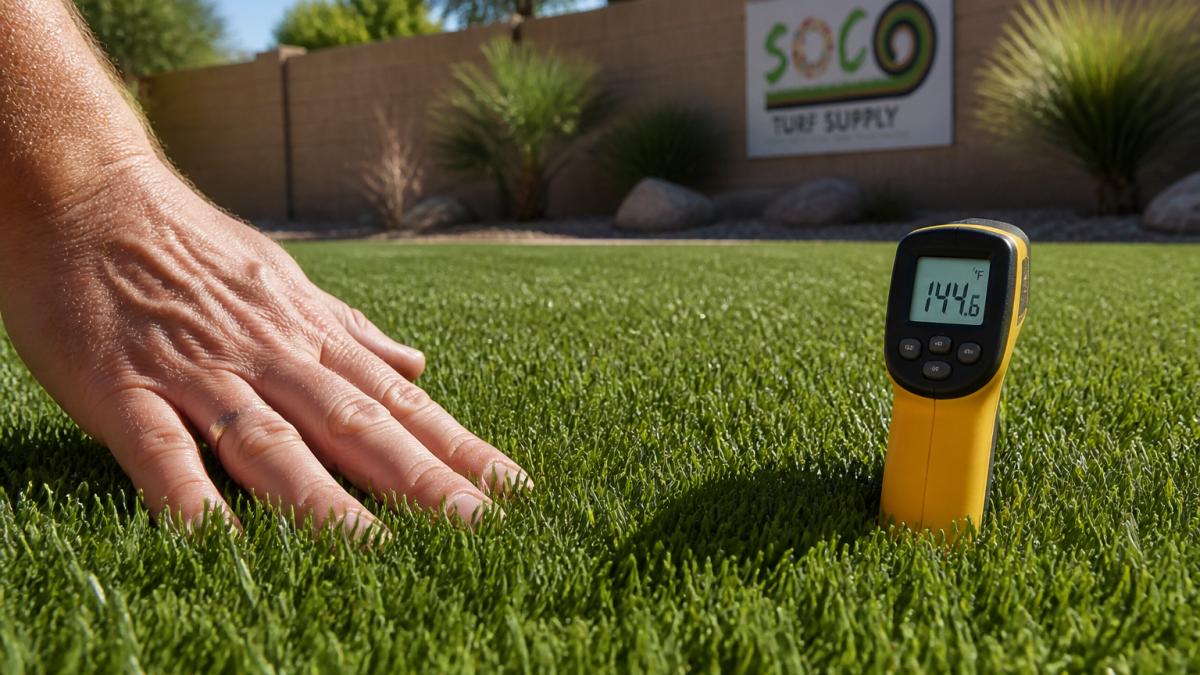
Turf surface temperature runs much hotter than the air around it. On a 100°F day, the surface can climb far higher. That heat affects both comfort and lifespan.
- Lighter colors reflect more heat
- Proper infill lowers surface temps
- Good airflow under the turf helps it cool
This is why infill choice matters so much in desert yards.
Best Artificial Turf for Dogs in Hot, Dry Yards
The best artificial turf for dogs in hot, dry yards combines heat resistance, durable fibers, and strong drainage. Dogs add wear, odor, and waste to the mix, so the turf has to handle all three. In Midland, we recommend pet-rated turf with a tight, resilient blade and a permeable backing.
Key features to look for:
- High UV rating – resists fading under constant sun
- Dense, short blades – stand up to claws and traffic
- Permeable backing – drains waste and water fast
- Antimicrobial infill options – cut down on odors
Skipping proper drainage is the number one cause of pet-area odors. When waste and water cannot drain, bacteria build up, and no amount of rinsing fixes it. Install a proper base layer first.
For families with kids and pets, non-toxic materials matter too. Ask your supplier for product documentation before you buy.
Turf Infill for Heat Reduction: Silica, Zeolite, and More
Turf infill for heat reduction works by reflecting sun, absorbing moisture, or improving airflow. The right infill can lower surface temperature and extend the life of your turf. The wrong one traps heat and makes the yard unusable on hot days.
| Infill Type | Best For | Heat Handling | Notes |
|---|---|---|---|
| Silica sand | Budget projects | Moderate | Affordable, widely used |
| Zeolite | Pet areas | Good | Absorbs odors and moisture |
| Crumb rubber | Sports use | Poor in heat | Retains heat, not ideal for desert |
| Cool infill blends | Hot climates | Best | Designed to reflect heat |
For desert yards, cool infill blends and zeolite are the strongest picks. Crumb rubber, common in sports fields, holds heat and gets uncomfortable fast.
Artificial Grass Maintenance Tips for Desert Conditions
Artificial grass maintenance tips for desert conditions focus on three things: dust, heat, and drainage. Desert turf does not need mowing or watering, but it does need occasional care to stay cool and clean.
- Rinse the turf to clear dust and pollen
- Brush fibers to keep them upright
- Check drainage paths before monsoon season
- Remove debris that blocks airflow
- Spot-clean pet areas regularly
Rinsing your turf in the early morning, not midday, lets it cool gradually and prevents rapid temperature swings that stress the backing over time.
Contractors and property managers in Midland who maintain multiple sites find that a simple monthly routine prevents most long-term problems. If you need help choosing the right materials, a supplier with installation expertise can guide you.
How Long Does Long-Lasting Turf for Desert Last?
Long lasting turf for desert typically lasts 15 to 20 years when it is UV-tested, properly installed, and maintained. Lifespan depends on fiber quality, infill choice, sun exposure, and traffic. Cheap turf in full sun may fade in a few years. Quality turf holds its color for far longer.
What extends lifespan:
- UV-tested fibers with proven stabilizers
- Heat-friendly infill
- Correct base and drainage
- Regular light maintenance
What shortens it:
- Thin backing and weak fibers
- Heat-trapping infill
- Poor drainage and standing water
- Heavy traffic without a commercial-grade product
For commercial properties with heavy foot traffic, choose a product rated for that load. Residential turf and commercial turf are not built the same, and using the wrong one cuts lifespan sharply.
The single biggest factor in how long turf lasts in the desert is UV protection. Everything else, from infill to maintenance, supports that core strength.
Desert heat is unforgiving, and the wrong turf will not survive it. Soco Turf Supply helps homeowners and contractors across the Permian Basin choose UV-tested, performance-rated turf built for hot, dry conditions. We offer warehouse-direct pricing, a full supply of installation materials and equipment rentals, and expert guidance on every project. Whether you are refreshing one backyard near me or outfitting a large commercial site, our team delivers the consistency and durability your project needs. Get started with Soco Turf Supply and get an estimate for turf that lasts.
Frequently Asked Questions
Does artificial turf melt in the Texas heat?
Standard polyethylene turf can soften above 140°F, but quality desert turf uses UV-stabilized fibers rated for high heat. Melting typically happens from reflected glass or metal, not ambient air. In Midland, surface temps can reach 160°F on 100°F days, so choose turf with a high UV rating and consider heat-reducing infill.
How long does artificial grass last in Midland, TX?
With proper installation and maintenance, long-lasting turf for desert climates lasts 15 to 20 years. UV-stabilized fibers and quality infill are key. Without them, fading and brittleness can appear in 3 to 5 years. Warehouse-direct suppliers often provide performance documentation to confirm expected lifespan.
What features make artificial turf durable in desert climates?
Look for UV-stabilized polyethylene or nylon fibers, a face weight of 60 to 80 ounces per square yard, and a permeable backing. Heat-reducing infill like silica sand or zeolite helps. These features resist fading, brittleness, and high surface temperatures common in desert yards.
Is artificial turf worth it for desert landscaping?
Yes, if you want to cut water use and maintenance. Desert turf eliminates mowing, watering, and reseeding. It stays green year-round and handles heavy use. The upfront cost is higher, but savings on water and upkeep add up. Choose UV-rated products and proper infill to maximize lifespan.