Table of Contents
- Why Artificial Turf Fades: Causes You Can Actually Control
- How Artificial Turf UV Protection Works (and What to Look For)
- Window Reflection Turf Damage: The Hidden Threat to Your Lawn
- How to Clean Artificial Turf Without Stripping Its Color
- Stop Turf Melting and Burning Before It Starts
- Brushing, Raking, and Infill Habits That Protect Fiber Color
- Repair or Replace? Fixing Faded and Melted Turf Sections
- Conclusion: A Preventative Maintenance Routine That Works
- Frequently Asked Questions
Last Updated: September 28, 2026
Why Artificial Turf Fades: Causes You Can Actually Control
Learning how to prevent artificial turf fading starts with knowing what actually causes it. Sun exposure breaks down the color pigments in synthetic grass fibers over time, but heat, chemicals, and reflected light speed up that damage.
At Soco Turf Supply, we see three main culprits: UV radiation, window reflection, and poor maintenance habits. The good news? All three are manageable.
Fading is not the same as normal wear. A quality turf with proper UV stabilization holds its color for years. The problems start when intense sun, hot surfaces, and neglect work together.
Here is what you can control:
- Shade and reflection sources near the turf
- Cleaning products and how often you rinse the surface
- Brushing habits that keep fibers upright
- The UV rating of the turf you buy in the first place
Each one matters. Skip any of them and you shorten the life of your investment.
How Artificial Turf UV Protection Works (and What to Look For)
Artificial turf UV protection works through stabilizers built into the fibers during manufacturing. These additives absorb ultraviolet light and slow the breakdown of color and structure.
Most quality turf uses polyethylene or polypropylene fibers treated with UV stabilizers. Without them, sun exposure causes fiber degradation, color loss, and brittleness within a season or two.
Reading UV Stabilization Claims on Turf Spec Sheets
Look for specific numbers, not vague promises. A spec sheet should state the UV stabilization level and the expected color fastness under sun exposure.
Ask for documentation you can verify. At Soco Turf Supply, our turf is UV-tested and performance-rated, and we provide the paperwork contractors need to show clients.
What most guides miss is that UV protection fades over time too. Even well-made turf benefits from shade and regular care.
Window Reflection Turf Damage: The Hidden Threat to Your Lawn
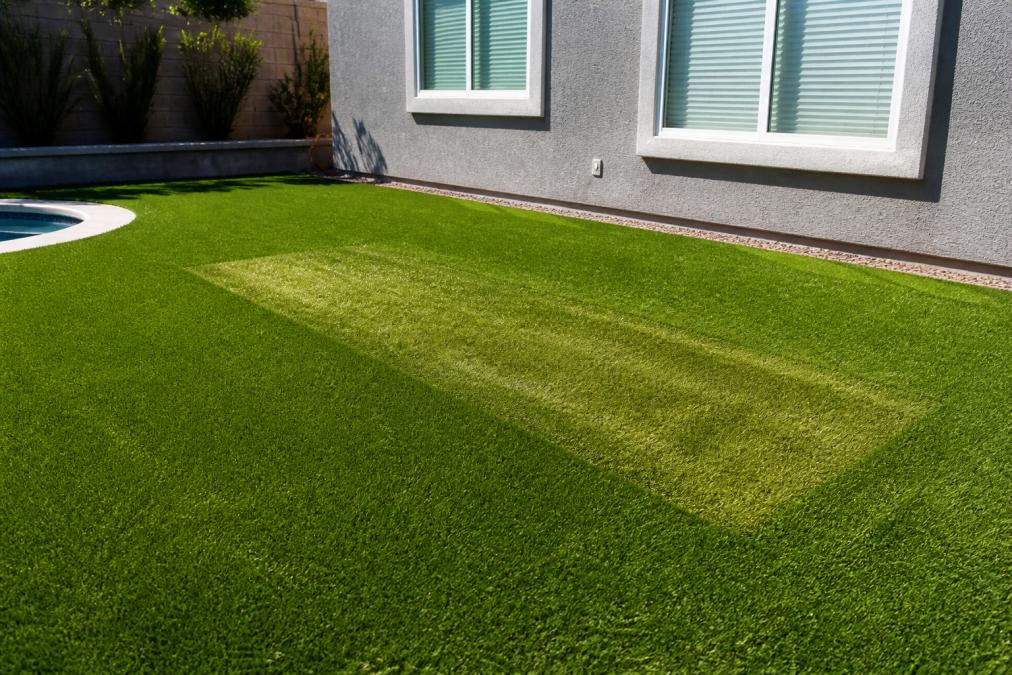
Window reflection turf damage is one of the most overlooked causes of melted and faded patches. Low-emissivity glass and standard windows can focus sunlight like a magnifying glass onto a small area of turf.
Solar Screens, Window Film, and Low-Emissivity Glass Fixes
You can break the reflection before it reaches the turf. A few practical options:
- Exterior solar screens diffuse light before it bounces off the glass
- Window film reduces the heat intensity and glare that cause concentrated reflection
- Low-emissivity glass changes how light reflects, often reducing hot spots
- Shade structures block direct sun on the affected area
How to Clean Artificial Turf Without Stripping Its Color
Cleaning keeps turf looking new, but the wrong chemistry strips color faster than sun alone. Most guides stop at “rinse it and use mild soap.” The bigger issue is what else lands on the fibers: pool splash-out, hard-water minerals, sunscreen, insect repellent, and lawn chemicals from adjacent surfaces.
The Chemicals That Actually Attack Color
Chlorine and salt from pool splash-out are oxidizers. Left on the surface, they break down the same UV stabilizers that protect the pigment, so a lawn next to a pool fades unevenly, worst along the splash zone. Rinsing the splash zone with fresh water after heavy pool use dilutes that load before it concentrates.
What to Never Put on Turf
- Bleach, pool shock, and other oxidizers
- Pressure washers on a narrow tip (they fray fibers and flatten infill)
- Solvent-based cleaners, paint thinner, and adhesive removers
- Abrasive powders and stiff wire brushes
- Fertilizer or weed-and-feed granules that land on the turf and sit
A Cleaning Routine That Protects Color
- Rinse the whole surface with a hose to lift dust, pollen, and airborne grit.
- Spot-clean sticky or oily marks with mild soap and water.
- Rinse again to remove all residue, leftover soap attracts dirt.
- Let the surface air dry in the sun.
- Rinse the pool splash zone and pet areas more often than the rest of the lawn.
For pet areas, rinse several times a week. Urine and waste left too long can stain and weaken fibers, and the ammonia load adds to the chemical stress. Deal with spills and pet waste immediately, before they set into the infill.
Color loss is rarely just sun damage. If a lawn fades in a pattern, along a pool edge, under a drip line, or in one traffic lane, the cause is usually chemical or mechanical, not UV. Match the fix to the pattern.
Stop Turf Melting and Burning Before It Starts
Turf melting and burning come from concentrated heat, not from the sun alone. Reflected light, hot objects, and even a barbecue grill left on the surface can cause thermal damage.
Prevention is simpler than repair:
- Keep grills, fire pits, and hot tools off the turf
- Fix window reflection problems early
- Add shade where heat intensity peaks
- Choose turf with higher heat and abrasion resistance
Leaving a glass table, mirror, or window reflection aimed at your turf can melt a patch in a single afternoon. Check your yard for reflective surfaces before summer hits.
Brushing, Raking, and Infill Habits That Protect Fiber Color
Brushing keeps fibers upright so they wear evenly and reflect light the way they should. Flat, matted fibers look dull and fade faster because they trap heat and dirt.
A quick maintenance schedule:
- Brush high-traffic zones every two to three weeks
- Rake out debris and leaves monthly
- Top up infill where it has settled
- Check drainage after heavy rain
Repair or Replace? Fixing Faded and Melted Turf Sections
Fading and melting are different failures, and they have different fixes. Melting is physical damage, the fibers are deformed and will not recover. Fading is pigment loss, which sometimes can be masked or partially restored. Knowing which one you have decides whether you patch, restore, or replace.
Can Faded Turf Be Restored?
Sometimes, partially. A few options exist, each with trade-offs:
- Turf colorant or dye: A spray-on pigment that coats the fibers and restores a greener look. It works best on evenly faded, structurally sound turf. It is a cosmetic fix, it does not restore UV protection, so it fades again over time and needs reapplication.
- Color-restoring coatings: Some products combine pigment with a UV-blocking layer. These can extend the look longer than dye alone, but they change the fiber’s feel and can void a manufacturer’s warranty, so check the warranty terms first.
- Targeted patching: For a single melted or badly faded zone, cut out the damaged section and seam in matching turf. This is the most durable fix when the rest of the lawn is healthy.
Restoration is a stopgap, not a cure. If fibers are brittle, breaking, or shedding, no coating will bring them back, the structure is gone.
How a Patch Is Actually Done
- Cut a clean rectangle around the damaged area, through the turf and into the base.
- Remove the old section and clean the base.
- Cut a matching piece from leftover turf, sized to the opening.
- Lay seam tape and adhesive along the edges, then set the patch.
- Brush the seam so fibers blend, and weight it while the adhesive cures.
The seam is the weak point. A same-batch piece blends far better than a new roll bought later, which is why saving spare turf from the original install matters.
When to Repair vs. Replace
Repair when:
- Damage is limited to a small area
- You have matching turf on hand
- The rest of the lawn is structurally sound and holds color
- The cause (reflection, a hot object) has been fixed
Replace when:
- Fading covers large sections or is uneven across the whole surface
- Fibers are brittle, breaking, or shedding across the lawn
- The turf is past its rated life
- The cause is ongoing and cannot be corrected
Fix the Cause First
A patch over an uncorrected reflection or chemical source will fail the same way. Before repairing, confirm the window reflection is redirected, the pool splash zone is rinsed, and hot objects are off the surface. Otherwise you are paying to redo the same damage.
Keep a few spare square feet of your original turf stored indoors, out of sun and moisture. When a patch melts or fades, a same-batch repair blends in far better than a new roll bought later.
Conclusion: A Preventative Maintenance Routine That Works
Preventing artificial turf fading comes down to a simple routine: manage reflection, clean gently, brush often, and keep infill topped up. Do these and your turf holds its color far longer.
Frequently Asked Questions
What causes artificial turf to fade or melt?
Two forces do most of the damage: UV radiation and concentrated reflected heat. Sun exposure breaks down the color pigments in polyethylene and polypropylene fibers over time, while low-emissivity glass and energy-efficient windows can bounce sunlight onto a small patch of turf at amplified intensity. That reflected heat raises surface temperature enough to melt or singe fibers, which is why window reflection turf damage often looks like a burn rather than a slow fade.
Does UV protection in turf really make a difference?
Yes, but only if it is built into the fiber rather than coated on top. Quality turf blends add UV stabilizers during manufacturing, so the protection does not wash or wear away. Ask suppliers for documentation showing UV-tested, performance-rated results. Turf without stabilization can show noticeable color loss after a single harsh summer, while properly stabilized synthetic grass holds its color far longer under the same sun exposure.
How does window reflection affect artificial grass?
Low-emissivity windows and exterior solar screens can focus sunlight into a narrow beam, similar to a magnifying glass. That beam can push surface temperature high enough to melt fibers, leaving shiny, wrinkled, or browned patches. The fix is usually outside the turf: add exterior solar screens, apply window film, or reposition shade structures so the reflection lands on a hardscape surface instead of your lawn.
Can you restore the color of faded artificial turf?
You cannot reverse pigment loss inside the fiber, but you can improve appearance. Deep cleaning with a non-toxic cleaner removes dulling dirt and restores sheen. Brushing against the grain direction lifts matted fibers so light hits them evenly. For small badly faded or melted sections, cutting out and patching the affected area is more effective than replacement of the whole lawn. If fading covers most of the surface, replacement is the practical answer.