Table of Contents
- Tools Needed for Turf Installation
- Artificial Turf Base Preparation in Midland, TX
- Artificial Turf Drainage Requirements and Installation Steps
- Frequently Asked Questions
Last Updated: October 6, 2026
Tools Needed for Turf Installation
Installing artificial turf in West Texas starts with the right tool list. At Soco Turf Supply in Midland, TX, we see DIYers and contractors alike stall out because they skipped a tool, not because the turf was wrong.
Gather these before you start:
- Plate compactor for the base
- Wheelbarrow and shovel
- Landscape rake and hand tamper
- Utility knife with fresh blades
- Seam tape and turf adhesive
- 6-inch galvanized nails or staples
- Garden hose and marking paint
- Stiff broom or power broom
Rent what you’ll only use once. Buy what you’ll reuse.
Compact the base in two passes, not one. A single deep pass leaves soft spots that show up as ripples within months.
Artificial Turf Base Preparation in Midland, TX
Base preparation is the step that decides whether your turf lasts five years or fifteen. In Midland, TX, caliche and fast-draining soil change how you build that base.
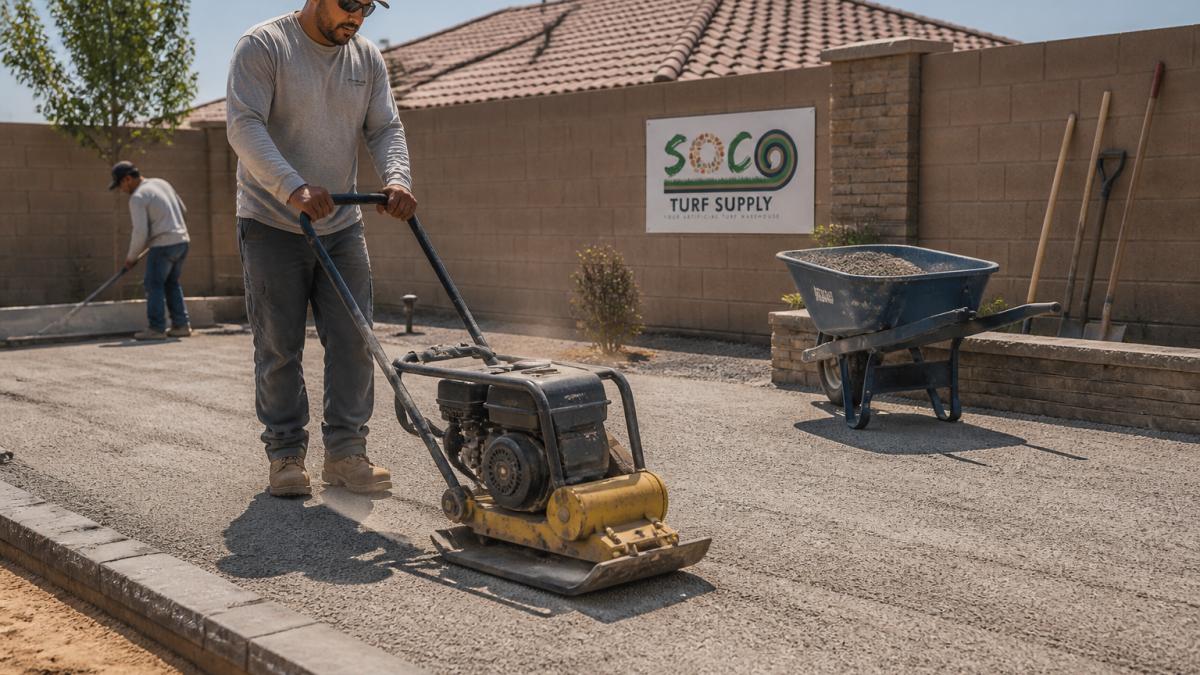
Here is how we would do it:
- Excavate 3 to 4 inches deep
- Grade for a 1 to 2 percent slope
- Lay woven geotextile fabric
- Add 3 to 4 inches of crushed angular gravel
- Compact in two passes
- Screed the surface flat
- Water lightly and re-compact
Skip the fabric and weeds push through within a season.
Rounding the base edges inward causes washouts after heavy rain. Keep edges square and firm.
Artificial Turf Drainage Requirements and Installation Steps
Drainage requirements come down to one number: a 1 to 2 percent slope away from structures. Turf drains through its backing and perforated base, so the slope does the real work.
Installation steps:
- Roll turf out and let it relax in the sun
- Trim with a utility knife, leaving a half-inch margin
- Secure seams with tape and adhesive
- Nail edges every 6 to 8 inches
- Power broom to lift the fibers
- Add infill if your product calls for it
For local guidance, University of California turf drainage research covers slope and permeability basics. Homeowners searching for artificial turf installation near me in Midland should confirm slope before ordering.
Slope first, turf second. No amount of infill fixes standing water.
Frequently Asked Questions
What tools are needed for turf installation?
You will need a plate compactor, wheelbarrow, shovel, rake, utility knife, turf cutter, and landscape staples. For larger jobs, rent a skid steer to move base material. Soco Turf Supply rents equipment and stocks every installation material you need, so you can pick everything up in one trip.
How do you prepare the ground for artificial turf in Midland, TX?
Excavate 3 to 4 inches of existing soil, then compact a 2 to 3 inch layer of crushed granite or decomposed granite. Grade the base away from structures so water flows off the surface. Soils in Midland drain quickly, so a properly compacted base is the key step that prevents shifting after monsoon rains.
Do I need a drainage system for artificial turf in West Texas?
Yes. Artificial turf drainage requirements call for a permeable base and a slight slope, about 1 to 2 percent, so water moves off the surface. West Texas storms drop heavy rain fast, and standing water can damage the backing. Perforated drain pipe along the low edge helps move water away from the base.
West Texas heat and caliche test every installation. Soco Turf Supply supplies UV-tested, performance-rated turf, base materials, and equipment rentals at warehouse-direct pricing, so your project moves without a middleman. Our team guides contractors and homeowners through every step, from base prep to final broom. Get your estimate and build it right the first time.