Last Updated: November 22, 2026
Quick Summary
The best artificial turf for high traffic medians is chosen by site conditions rather than appearance, weighing traffic exposure, heat, drainage, and sightlines. Soco Turf Supply in Midland, TX, helps compare short-pile, dense, UV-tested, and perforated-backing options for high traffic medians using product-specific documentation.
- Short-pile turf, typically 3/4 inch to 1 inch, supports roadside visibility and reduces debris catching.
- Face weight alone does not prove durability; request wear-test data and the infill specification.
- Compare the full drainage system, including perforation rate, aggregate gradation, and outlet capacity.
- Request UV test documentation tied to the exact blend, test method, and exposure duration.
- Define acceptance criteria and product records before ordering municipal turf.
Table of Contents
- Why High-Traffic Medians Need Different Turf
- How We Compared the 10 Turf Options
- The 10 Best Turf Options for High-Traffic Medians
- Commercial Artificial Turf Specifications That Matter for Medians
- UV-Resistant Artificial Turf for West Texas Sun and Heat
- Artificial Turf Drainage and Backing for Median Installations
- Planning Your Commercial Turf Installation Materials Order
- Request a Median Turf Estimate From Soco Turf Supply
- Frequently Asked Questions
Why High-Traffic Medians Need Different Turf
A roadway median needs turf selected for traffic exposure, heat, drainage, and safe visibility, not just appearance. Our guide to the 10 best turf for high traffic medians explains how to compare those factors for projects in Midland, TX. At Soco Turf Supply, we focus on artificial turf and installation materials for residential and commercial projects. The right choice starts with the site, not a catalog photo.
High-traffic median turf is a synthetic surface selected to handle repeated contact and roadside conditions while keeping a consistent appearance. For a median, the practical test is whether the turf’s pile, backing, and drainage suit the site and its maintenance plan.
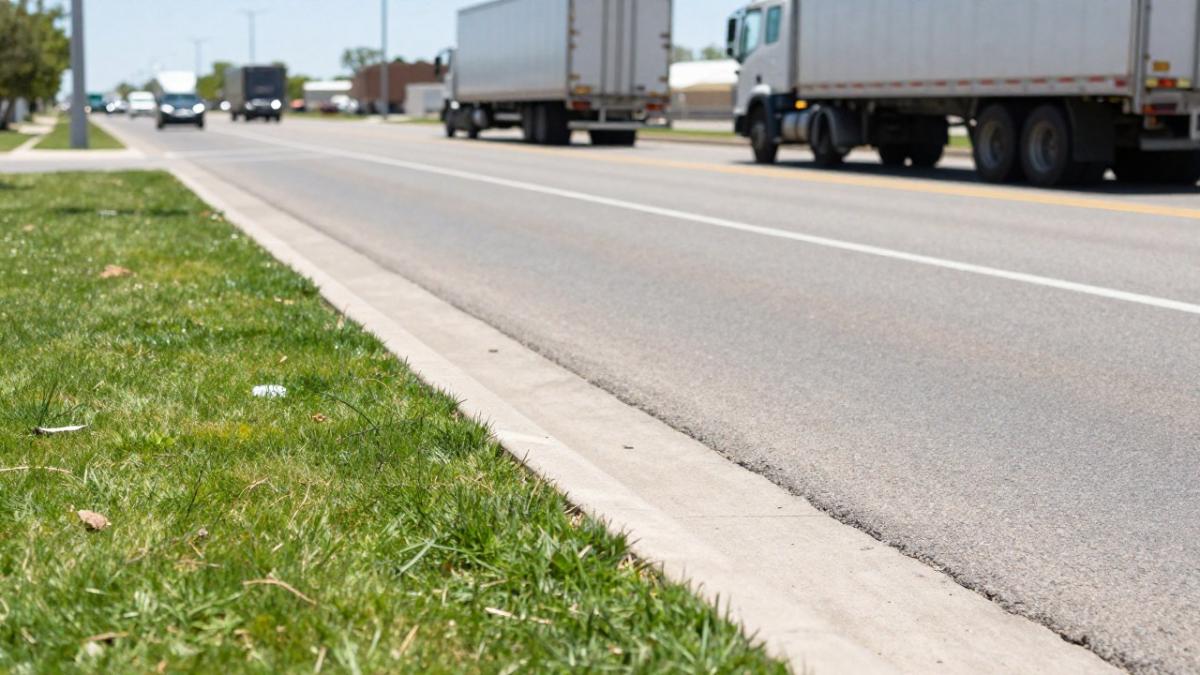
Traffic exposure, heat, and roadside pollutants
A median faces more than foot traffic. Road spray, dust, direct sun, heat, and limited access for maintenance all affect how a surface performs. Visibility matters too: turf should look even from the road and should not create loose debris or a distracting patchwork.
For Midland projects, assess the site’s sun exposure, drainage route, vehicle access, and any nearby pedestrian use. Unlike broad lawn advice, median planning must account for traffic safety and maintenance crews working beside moving vehicles. Check local requirements with the relevant public works or transportation authority before specifying materials.
How We Compared the 10 Turf Options
The 10 best turf for high traffic medians are best judged by use case rather than by a universal ranking. We compare turf types through five practical checks: wear resistance, pile height, turf density, backing and drainage, and the documentation available for commercial use.
A common mistake is to choose the densest-looking product without checking how its backing handles water or whether the pile suits the site. Product labels can help, but request the full specification sheet and confirm that the stated performance applies to the intended installation.
| Turf option | Best suited to | Main check |
|---|---|---|
| Short-pile commercial turf | Roadside visibility | Pile height |
| Dense face-weight turf | Repeated contact | Wear documentation |
| Perforated backing turf | Sites needing drainage | Water flow details |
| UV-tested turf blend | Strong sun exposure | Test documentation |
| Multi-use commercial turf | Mixed site conditions | Full specification |
Use this comparison as a screening tool, not a substitute for product data. Ask suppliers for samples and written specifications, then compare the same criteria across each option.
The 10 Best Turf Options for High-Traffic Medians
The best option depends on the median’s exposure, traffic volume, and maintenance access; there is no single turf blend that fits every roadway. For the 10 best turf for high traffic medians, compare these product categories against median-specific criteria: pile height for sightlines, face weight and density for wear, backing and perforation for drainage, UV test documentation for West Texas sun, and warranty terms for municipal procurement. Request specifications for the exact product under review rather than relying on category labels.
- Commercial turf from Soco Turf Supply: A starting point for buyers who want turf, installation materials, equipment rentals, and expert guidance from one supplier. Soco Turf Supply offers UV-tested, performance-rated turf blends. Ask for documentation tied to the specific blend. The right choice still depends on the project’s site conditions and specifications.
- Short-pile turf (typically 3/4 inch to 1 inch pile height): A practical choice where a neat, low-profile look supports roadway visibility and reduces the chance of tall blades catching wind or debris. Confirm wear performance and backing details, and check that the pile height meets any local sightline or clear-zone requirements.
- Dense commercial turf (face weight commonly in the 60-80 oz range): Suited to areas with repeated contact, provided the product documentation supports the intended use. Density alone does not prove durability, ask for wear-test data and confirm the infill specification that supports the stated face weight.
- UV-tested turf blends: Worth screening for open medians with strong sun exposure. Request the test information for the exact blend, including the test method and the exposure duration, and confirm that the test applies to the color and backing being specified.
- Perforated-backing turf: A candidate where drainage is a priority. Confirm the full base and drainage design, not just the backing, perforation rate, aggregate gradation, and outlet capacity all affect how quickly water leaves the median.
- Turf with commercial wear ratings: Useful when procurement teams need comparable product records. Check what the rating measures (traffic class, abrasion cycles, or warranty exclusions) and whether the rating applies to the installed system or the turf alone.
- Low-sheen turf: Can reduce an overly bright appearance in direct sun and limit glare that distracts drivers. Review a sample outdoors at the actual viewing angle before selection, since sheen is difficult to judge from a catalog photo.
- Multi-directional turf: May create a more even visual effect from different road approaches. Check appearance from the actual viewing angles, including low-angle sun, and confirm that the blade orientation does not create a directional shine.
- Turf designed for mixed use: Consider it where maintenance access and occasional pedestrian contact both matter. Verify the product’s stated use and confirm that the warranty covers the intended traffic type.
- Custom-specified turf: Best when project requirements call for a defined pile, backing, and performance profile. It requires careful review of the full specification, and municipal buyers should define acceptance criteria before ordering.
Watch out: choosing the densest-looking product without checking how its backing handles water or whether the pile suits the site is the most common specification error on medians. The best shortlist is the one with evidence for the actual site, not the longest feature list. For available artificial turf materials, compare product details before making a procurement decision.
Commercial Artificial Turf Specifications That Matter for Medians
Commercial artificial turf specifications should describe how the product is built and what performance information supports its intended use.
Pile height and sightlines. On a divided roadway, turf height affects how the median reads from a moving vehicle.
Density, face weight, and wear. Face weight and density describe how much fiber is in the surface, but neither alone proves durability.
Backing and drainage. Backing choice cannot correct a poorly planned base. Evaluate the complete system: perforation rate, aggregate gradation, slope, and outlet capacity.
UV and heat performance. UV resistance and heat tolerance are separate questions.
Warranty and lifecycle terms. Municipal buyers should compare warranty length, exclusions, and replacement terms across products using the same scope and assumptions.
Ask suppliers for:
- The complete product specification sheet
- Available wear and UV test documentation, including test method and duration
- Backing and drainage details, including perforation rate and compatible aggregate
- Installation requirements and compatible materials
- Warranty terms, exclusions, and replacement guidance
- Guidance on repair, replacement, and maintenance
Municipal buyers should also define acceptance criteria before ordering. Specify the required product records, sample review process, installation scope, and who will inspect the finished surface. See the commercial turf durability standards when setting those criteria.
UV-Resistant Artificial Turf for West Texas Sun and Heat
UV-resistant artificial turf is made to withstand exposure to sunlight, but the label alone does not show how a specific product performs. For a Midland median with open sun exposure, request the relevant test documentation and confirm that it applies to the exact turf blend being considered.
Heat tolerance and color retention are separate questions. A product may be described as UV-tested, yet buyers still need to check the test basis, backing details, and maintenance instructions. In practice, reviewing a physical sample outdoors can reveal appearance differences that are easy to miss indoors.
Soco Turf Supply offers UV-tested, performance-rated turf blends, but project teams should request product-specific documentation before including a blend in a bid. Our guide to UV testing standards explains what to look for when reviewing test claims.
Artificial Turf Drainage and Backing for Median Installations
Artificial turf drainage depends on the backing, the prepared base, and the route water can take away from the installation. A backing choice cannot correct a poorly planned base, so evaluate the complete system before approving materials.
For a median, map the site’s slope and drainage outlet, then confirm how the proposed backing and aggregate work together. Check that the installation plan accounts for runoff and does not direct water toward a roadway hazard or neighboring property. Local review may be needed for drainage requirements.
The thing many buyers miss is that product selection and installation planning are one decision. Request details on backing, infill, base materials, and maintenance needs together. For project-specific steps, use the Midland drainage installation guide and review infill options for drainage.
Planning Your Commercial Turf Installation Materials Order
A commercial turf installation materials order should follow a measured site plan and a written product specification. Confirm dimensions, seams, edge details, base requirements, drainage, infill, and equipment needs before placing the order. This prevents a mismatch between the turf and the materials needed to install it.
Use this checklist with your contractor or procurement team:
- Record median dimensions and access limits.
- Confirm the selected turf blend and backing.
- Review drainage paths and base requirements.
- List infill and edge materials from the installation plan.
- Request product documentation for bid and approval records.
- Confirm delivery timing and equipment needs with suppliers.
- Assign responsibility for inspection and maintenance.
Municipal projects should also plan for repair access and future replacement, not just initial installation. Lifecycle cost depends on the full maintenance and replacement plan, so compare options using the same scope and assumptions rather than relying on a product label alone.
Request a Median Turf Estimate From Soco Turf Supply
A useful estimate starts with the site conditions and the product requirements, not a generic square-foot figure. Share the project location, measured area, expected use, drainage needs, and any required performance documents so the supplier can help identify suitable materials.
For teams searching for turf near me in Midland, an in-store conversation can help clarify product and installation-material questions. Soco Turf Supply provides turf, professional installation materials, equipment rentals, and expert guidance. Pricing depends on project details, quantity, and delivery, so request a current estimate.
Roadway median projects are difficult when product specifications and site conditions do not line up. Soco Turf Supply offers UV-tested, performance-rated turf blends, installation materials, and equipment rentals for projects in the Permian Basin. Get started with Soco Turf Supply and request a median turf estimate based on your project requirements.
Frequently Asked Questions
What is the best artificial turf for high-traffic medians?
The best option depends on expected foot and vehicle exposure, sun intensity, and drainage conditions. For medians in the Midland area, prioritize turf with UV-stabilized fibers, dense pile for wear tolerance, and a backing that drains well after heavy rain. Soco Turf Supply can help compare specifications for your site. Pricing depends on quantity, dates, and delivery, so request a quote from Soco Turf Supply’s website for current figures.
Can artificial turf hold up to heavy commercial traffic?
Commercial-grade artificial turf with higher pile density and a reinforced backing is designed to handle sustained use better than residential products. For larger commercial properties with heavy foot traffic, confirm the product’s wear rating and installation method before ordering. Soco Turf Supply offers commercial artificial turf and installation materials for commercial projects.
Does UV exposure cause artificial turf to fade or become brittle?
Quality turf uses UV-stabilized fibers to resist fading and brittleness in strong sun. West Texas heat and sunlight are intense, so look for products with documented UV testing and performance ratings. Ask your supplier for documentation you can share with clients before committing to a purchase.
How do I prevent drainage problems with median artificial turf?
Drainage depends on the backing, infill, and the base preparation beneath the turf. Choose a perforated or drainage-optimized backing, prepare a compacted and sloped base, and confirm the installation plan with your supplier. Proper drainage design helps prevent standing water and odor issues over time.
