Last Updated: November 21, 2026
Quick Summary
To remove leaves from artificial turf, start with a leaf blower on its lowest setting for dry leaves, then rake gently with a plastic rake and sweep with a stiff-bristled broom. Wet leaves need loosening with a turf brush before lifting, and drainage areas should be cleared and rinsed.
- Set the leaf blower to its lowest airflow so infill is not pulled out of the turf.
- Use a plastic rake with flexible tines rather than steel to avoid snagging the fibers.
- Brush wet leaves across the grain first, then lift them rather than dragging them.
- Never use a pressure washer on embedded debris, because it drives matter deeper into the infill.
- Clear leaves from low spots and drain edges, since debris there slows drainage.
Table of Contents
- Why Leaves Matter on Artificial Turf in Midland
- 1. Remove Dry Leaves With a Leaf Blower on Low Setting
- 2. Rake Turf With a Plastic Rake, Not Steel
- 3. Sweep With a Stiff-Bristled Broom or Turf Brush
- 4. Pick Up Tight Corners, Edges and Fence Lines by Hand
- 5. How to Remove Wet Leaves and Stubborn Embedded Debris
- 6. Rinse the Turf and Clear Debris From Drainage Areas
- Maintenance Tips to Keep Leaves From Building Up
- Frequently Asked Questions
Why Leaves Matter on Artificial Turf in Midland
Leaves look harmless on synthetic grass, but they cause real problems when they sit for days, so knowing how to remove leaves early keeps small messes from becoming bigger ones. Wet leaves trap moisture against the turf blades, and decomposing organic matter can leave odors and stains behind. A small pile of debris can turn into a bigger cleanup job, especially during the dry, windy stretches that are common across the Permian Basin.
Leaves also block drainage. Water needs a clear path through the surface, and a layer of debris can make puddles form in low spots. That is why regular removal matters more than most homeowners expect.
Here is what makes leaf removal on artificial turf different from raking a real lawn:
- Blades are synthetic. They bend and spring back, but they can tear or flatten if you pull too hard.
- Debris settles into the fibers. Leaves and fine grit work down into the infill, where they are harder to reach.
- Wind moves debris fast. Leaves blow in from fences, trees and neighboring yards, so you may need to clean more often than you expect.
The seven methods below cover dry leaves, wet leaves, embedded debris and drainage cleanup, so you can match the right approach to the mess in front of you.
1. Remove Dry Leaves With a Leaf Blower on Low Setting
A leaf blower is the fastest way to clear dry leaves from a large turf area. Set it to the lowest airflow your blower allows. High power can pull infill out of the turf and leave the fibers matted.
Work in one direction, pushing leaves toward a collection spot at the edge of the lawn. Keep the nozzle about 6 inches above the surface and move in steady passes.
Watch out: Never aim a blower straight down into the turf for long. Concentrated air can loosen infill and push it toward the edges.
2. Rake Turf With a Plastic Rake, Not Steel
Steel rakes can scratch and snag synthetic fibers. A plastic rake with flexible tines is the safer choice. Rake gently in the direction of the fibers, then lift the leaves into a bag or bin.
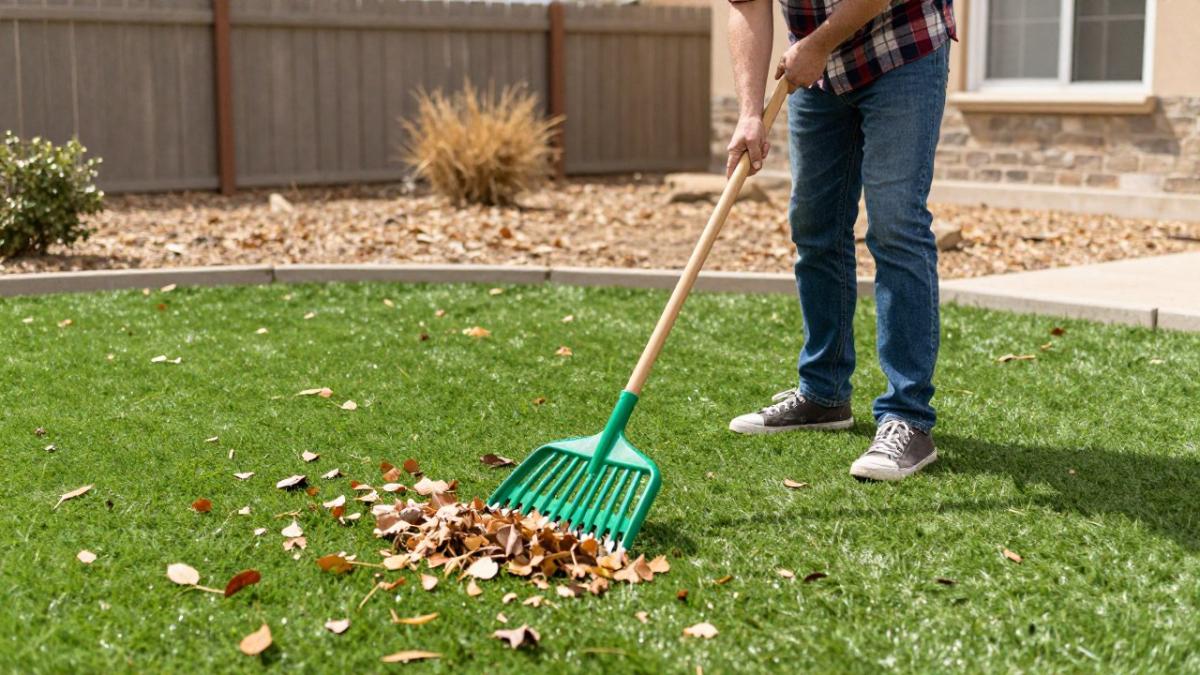
A light raking pass after blowing can pick up what the blower leaves behind, especially around planters and under shrubs.
3. Sweep With a Stiff-Bristled Broom or Turf Brush
A stiff-bristled broom or turf brush helps lift debris that has settled between blades. Brush across the grain with short, firm strokes, then brush with the grain to stand the fibers back up.
A turf brush can help with fine debris and dust that a blower cannot move, and it can help restore the upright look of the turf after heavy foot traffic.
4. Pick Up Tight Corners, Edges and Fence Lines by Hand
Blowers and rakes miss corners, edges and the strip along fence lines, so you may need to remove leaves from these spots by hand. These spots collect leaves and debris that can stay wet for days. Use a hand tool, such as a small handheld brush or a pair of gloves, to pick up what is left.
Check the base of fences and the joints where turf meets concrete. Debris in these areas can hold moisture and slow drainage over time.
5. How to Remove Wet Leaves and Stubborn Embedded Debris
Wet leaves behave differently from dry ones. Water softens the leaf and lets it cling to the turf blades, and the weight presses the debris down toward the infill. Blowing wet leaves usually just pushes them into a mat, so the order of operations matters more than the tool.
Start by breaking the surface tension. A light pass with a stiff-bristled turf brush across the grain lifts the matted layer without dragging on the fibers. Work in short strokes and let the brush do the lifting rather than pressing hard into the turf.
Once the leaves are loosened, remove them by hand or with a plastic rake with flexible tines. Lift rather than drag. Dragging a rake through wet debris can pull fibers and shift infill toward the edges.
Avoid digging into the infill with fingers or tools, because that displaces the ballast and can leave low spots that collect water later.
Watch out: Do not use a pressure washer on wet, embedded debris. High-pressure water drives organic matter deeper into the infill and can wash the infill itself out of the turf.
If the debris has left a sticky residue or a dark stain, rinse the area with a garden hose on a gentle setting after the leaves are removed, then let it dry fully before walking on it.
Wet leaves and embedded debris need a different approach than dry leaves, and the right order of steps matters.
| Step | What to do | Note |
|---|---|---|
| Loosen the matted layer | Brush across the grain with a stiff-bristled turf brush | Short strokes; let the brush lift, not press |
| Remove the leaves | Lift by hand or with a plastic rake | Lift rather than drag |
| Clean up residue | Rinse with a garden hose on a gentle setting | Let the area dry fully before walking on it |
| Avoid | Pressure washing wet, embedded debris | Drives debris deeper and can wash out infill |
6. Rinse the Turf and Clear Debris From Drainage Areas
After the bulk of the leaves are gone, rinse the turf with a garden hose on a gentle setting. Rinsing washes away fine dust and leftover debris and helps the fibers stand up again.
Pay extra attention to drainage areas. Clear any leaves and grit from low spots, channel drains and the edges where water exits the lawn. If water still pools after rinsing, the infill in that area may need to be topped up or leveled. Good drainage keeps debris from settling in the first place.
Maintenance Tips to Keep Leaves From Building Up
Prevention on artificial turf is mostly about keeping debris from reaching the infill and keeping water moving. A routine that addresses both is more effective than occasional deep cleaning.
- Blow or sweep once a week during fall and windy stretches. In the Permian Basin, dry, windy conditions can move leaves and grit quickly, so a weekly pass keeps debris from settling between blades.
- Brush with the grain after blowing. A stiff-bristled turf brush or broom stands the fibers back up and lifts fine dust that a blower leaves behind.
- Rinse monthly with a garden hose on a gentle setting. Rinsing clears dust and fine organic matter from the surface and helps water move through the turf rather than pooling.
- Check drainage areas after storms. Clear leaves and grit from low spots, channel drains, and the edges where water exits the lawn. Debris in these areas slows drainage and can lead to standing water.
- Keep a collection bin near the lawn. A bin at the edge of the turf makes weekly cleanup a few-minute task instead of a project.
- Watch the infill line. If infill is visibly displaced toward edges or low spots, level it back into place before it compacts. Displaced infill reduces drainage and can create uneven wear.
Leaves mixed with pet waste, feathers, or other organic matter may need more than a blow-off. Remove the solids first, rinse the area, and let it dry fully.
Watch out: Avoid aggressive scraping or high-airflow blowing along fence lines and edges, where infill is often thinner. Concentrated force there can push infill out of the turf and expose the backing.
Get your next turf project started with Soco Turf Supply. Our UV-tested, performance-rated turf and warehouse-direct pricing help contractors and homeowners in the Permian Basin finish the job right.
Frequently Asked Questions
What is the best way to remove leaves from artificial turf?
For most lawns, start by removing dry leaves with a leaf blower on a low setting, then finish with a plastic rake or stiff-bristled turf brush to lift remaining debris from the fibers. Blow in one direction across the turf rather than in circles so debris gathers in a single collection spot. Avoid metal tools and high-pressure settings, which can flatten or tear turf fibers and disturb infill over time.
Can you use a leaf blower on artificial turf?
Yes, a leaf blower works well on artificial turf when it is set to a low or medium airflow. High power can lift infill and loosen fibers, so keep the nozzle moving and hold it at a low angle. Blowing is most effective on dry leaves and loose debris, and it is less useful for wet or matted material, which should be raked or brushed first.
How do you remove wet leaves from artificial turf?
Wet leaves tend to stick to the fibers, so let the turf dry slightly before tackling them. Then use a plastic rake or stiff-bristled turf brush to loosen the matted material and lift it onto a tarp or into a bag. Rinsing the area with a garden hose afterward helps clear remaining residue and organic matter from the surface.
How often should you clear leaves from artificial turf?
During heavy leaf fall, many homeowners clear debris weekly so leaves do not sit on the turf and break down. Outside of peak season, a monthly check is often enough. Frequency depends on the number of trees nearby, wind exposure and how quickly leaves collect near fences and edges, so adjust your schedule to what you see in your yard.
