Quick Summary
A turf supplier Midland buyers can trust sells the product and the install materials under one roof, publishes real specs, and gives written answers. Compare pile height, face weight, drainage rate, and UV rating, and confirm the quote includes base, infill, seaming, and edging.
- Compare face weight and pile height together, since either number alone can mislead.
- Ask for the UV rating in writing rather than accepting a verbal assurance.
- Confirm the quote includes base, infill, seaming tape, adhesive, nails, and edging.
- Check whether the supplier offers supply-only buying if you plan to install yourself.
- Ask about rental terms, delivery, and damage terms before committing to equipment.
Table of Contents
- What a Midland Turf Supplier Actually Does for Your Project
- How to Choose Artificial Turf for Midland Conditions
- Artificial Turf Installation Materials You Will Need
- Renting Equipment for a Turf Installation
- Questions to Ask an Artificial Turf Supplier Before You Order
- Comparing Supplier Options Across Midland and the Permian Basin
- Getting an Estimate and Placing Your First Turf Order
- Frequently Asked Questions
Last Updated: November 15, 2026
If you are searching for a turf supplier Midland, the decision comes down to a few practical questions: what the supplier stocks, whether it sells warehouse-direct, how it handles install materials and rentals, and whether it can support a project of your size. This guide walks through what a turf supplier actually does, how to match turf to West Texas conditions, and what to ask before you order.
What a Midland Turf Supplier Actually Does for Your Project
A turf supplier sells the product and the materials around it. Some suppliers also rent equipment, and some connect buyers with installers. Knowing which of those services a supplier handles helps you plan the project and avoid paying for the same thing twice.
At Soco Turf Supply, the focus is on high-quality artificial turf, installation materials, and equipment rentals, with warehouse-direct pricing. You can see the local stock, install materials, and rentals on the Midland turf supply warehouse page. For a homeowner, that means one place to buy the turf and the supplies.
Before you call any turf supplier Midland has to offer, list what the project needs: square footage, the area’s sun exposure, whether it is residential or commercial, and whether you plan to install it yourself or hire a crew. Those answers determine the product grade, the quantity, and the supporting materials.
How to Choose Artificial Turf for Midland Conditions
West Texas weather is hard on any outdoor surface. Long stretches of sun, high heat, dry wind, and blowing dust test turf differently than a coastal or humid climate does. Choosing turf for Midland means comparing measurable specifications, not just color and blade shape.
The Specifications That Actually Matter
Five numbers do most of the work when you compare turf products:
- Pile height, the length of the fiber above the backing. Taller pile looks plusher but traps more dust and takes longer to dry; shorter pile is denser-looking and easier to clean. For a busy residential yard or a commercial strip, a mid-range pile is the common compromise.
- Face weight, the weight of fiber per square yard. Higher face weight generally means a denser, more durable product. This is the single best number for comparing two products that look alike in a photo.
- Backing construction, the layer the fibers are tufted into. Backing determines how well the turf holds seams, how it drains, and how it performs when perforated for drainage.
- Drainage rate, how quickly water passes through the product. In the Permian Basin, most rain arrives in short, intense bursts, so drainage rate matters more than annual rainfall totals suggest. A product that ponds after a storm is a maintenance problem for years.
- Infill, the material brushed between fibers. Infill adds weight, keeps fibers upright, and affects surface temperature. Silica sand, crumb rubber, and coated infill options behave differently in heat and under pet use; ask which infill the supplier recommends for your application and why.
Heat, UV, and Dust in the Permian Basin
UV resistance affects how long fibers hold color and flexibility under intense sun. Ask for the UV rating in writing rather than a verbal assurance. Surface temperature is a separate issue: turf in full sun absorbs heat, and surface temperature can climb well above air temperature on a hot afternoon. You can read more on preventing heat damage in Midland’s climate. Infill choice and fiber color both influence how hot the surface feels underfoot.
Dust is the specification most buyers forget. For guidance on installing turf in West Texas conditions, see that page. Fine West Texas dust settles into pile and infill, and a product with tight spacing and heavy infill is harder to clean than an open, well-drained product. Ask the supplier how the product handles blowing dust and what cleaning routine they recommend.
Matching the Grade to the Use
Residential turf is usually chosen for appearance, comfort underfoot, and pet or child use. Commercial turf is built for heavier foot traffic, longer service hours, and more frequent cleaning. A 5,000-square-foot commercial space with constant traffic needs a higher-wear product than a backyard used a few times a week.
Watch out: a low face weight paired with a tall pile can look full in a showroom and flatten quickly under foot traffic, so compare face weight and pile height together rather than judging either number alone.
Artificial Turf Installation Materials You Will Need
Turf alone does not make an installation. Most projects need a base layer, infill, seaming tape and adhesive, nails or staples, and edging. Some also need a drainage layer, depending on the site’s soil and slope.
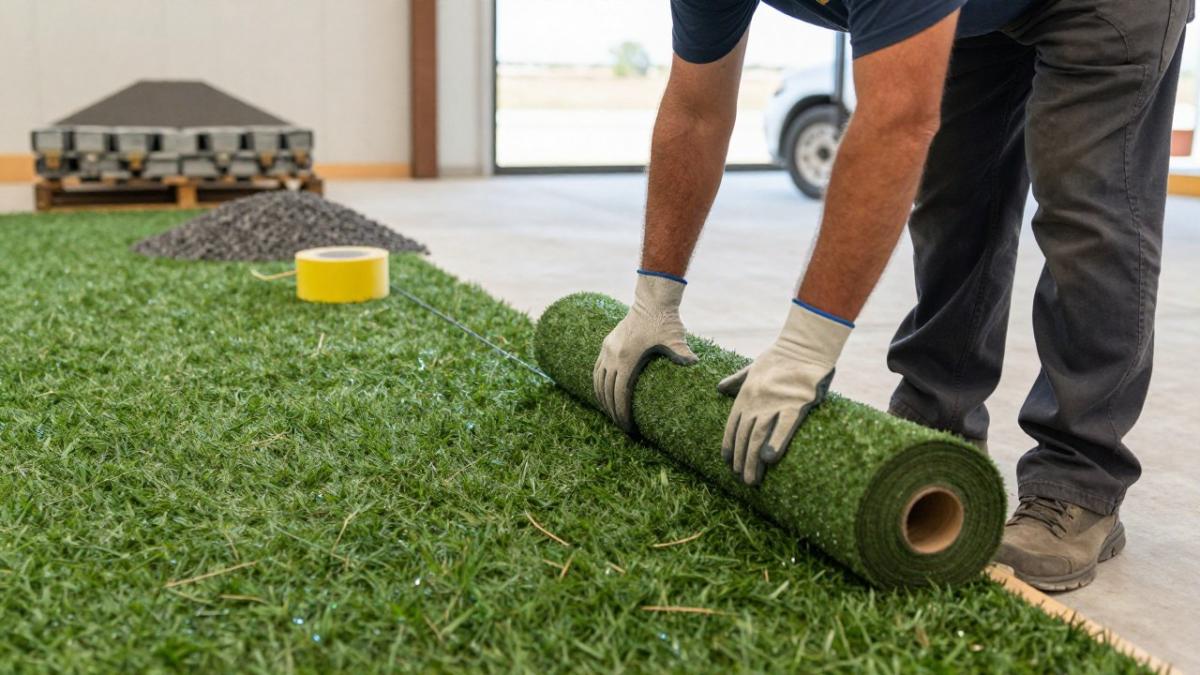
Ask your supplier for a complete materials list before you order. Missing one item can stall a crew mid-job.
When you compare quotes, make sure each one includes the same materials. A low turf price with no base or seaming supplies may cost more by the time the project is finished.
Renting Equipment for a Turf Installation
Renting can make sense for a one-time project. Buying specialty equipment for a single job often costs more than the project saves.
Confirm rental terms with the supplier before you commit, including rate structure, delivery and pickup, and damage terms.
Questions to Ask an Artificial Turf Supplier Before You Order
A short list of questions will show you quickly how a supplier operates:
- Is the turf UV-tested, and can you provide the performance rating in writing?
- Is this product suited to full sun, or only partial shade?
- Which grade fits my use: residential, commercial, pet, or play area?
- What installation materials does my project need, and are they included in the quote?
- Do you rent equipment, and what are the rental terms?
- How do you handle bulk orders for multiple properties?
- What does the warranty cover, and for how long?
A reliable supplier answers these without hesitation and puts the answers in writing. Pricing depends on quantity, dates, and delivery, so ask for a written quote.
Comparing Supplier Options Across Midland and the Permian Basin
Midland suppliers vary in what they stock, how they price, and how far they will deliver. Some sell only retail turf. Others focus on contractors and bulk orders. Some bundle installation services, while others sell supply only. Because most local results are individual supplier pages, the practical move is to compare every option against the same short list of criteria rather than reading each page on its own terms.
A Side-by-Side Comparison Framework
Score each supplier you consider on these six points, and ask for the answers in writing:
- Product range and specifications, Does the supplier publish pile height, face weight, backing, drainage rate, and UV rating for each product, or only marketing descriptions? A supplier who can hand you a spec sheet is easier to compare and easier to hold to a warranty claim.
- Supply-only purchasing, Can you buy turf and materials without installation? Some buyers want to install themselves or use their own crew; confirm that supply-only is an option before you invest time in a quote.
- Materials completeness, Does the quote include base layer, infill, seaming tape and adhesive, nails or staples, and edging, or will those be added later? A turf-only quote is not comparable to a complete materials quote.
- Equipment rentals, Does the supplier rent compactors, cutters, and seaming tools, and what are the terms? Renting from the same supplier can simplify scheduling, but confirm delivery, pickup, and damage terms.
- Service area and delivery, Does the supplier deliver to your specific address in Midland or the surrounding Permian Basin, and how are delivery windows handled? A supplier that serves the region may still have practical limits on distance or order size.
- Bulk and multi-property capacity, If you manage rentals or commercial sites, ask how the supplier handles orders across multiple properties and whether pricing and lead times change at volume.
Supply-Only Buying and Logistics in Midland
Supply-only purchasing is the option most buyers do not ask about, and it is often the difference between a workable budget and an inflated one. If you plan to install yourself or use your own crew, confirm three things up front: whether samples are available so you can compare products in person, how delivery or pickup works for your order size, and what lead times apply for the product you want.
For contractors, the logistics question is scheduling: can the supplier stage materials across multiple jobs without holding up a crew? Ask how bulk orders are sequenced and whether delivery can be coordinated to the installation calendar.
What to Confirm Before You Commit
Once you have answers from two or three suppliers, compare them on the same six points. The supplier with the lowest turf price may not be the lowest total cost once missing materials, rental fees, and delivery are added back in. A supplier that works well for a single backyard may not handle a multi-property order or a large commercial site, and a supplier built for contractors may not be set up for a homeowner buying one roll.
Compare any supplier’s offering against the six points above, then put the same questions to each supplier you consider so the comparison is like for like. For how avoiding middleman markup changes the math, see that guide.
Getting an Estimate and Placing Your First Turf Order
Start by measuring the area and noting the sun exposure, the intended use, and any drainage concerns. Share those details when you request an estimate. The more specific the request, the more accurate the quote.
Once you have a written estimate, confirm the product specs, the materials list, the rental items, the delivery date, and the warranty terms. Then place the order. Keep the quote and spec sheet with your project records, since they are useful for inspections, warranty claims, and any future expansion.
To request a quote from Soco Turf Supply, use the estimate option on the website. Include your project size and location, and share your intended use so the quote reflects your site.
Frequently Asked Questions
What should I look for in a turf supplier in Midland, TX?
Look for a supplier that lists its turf specifications, including pile height, face weight, and UV-stabilization details, and that can provide documentation on request. Ask whether the supplier stocks materials locally or ships from elsewhere, since lead times can affect project schedules. Pricing depends on quantity, delivery, and project timing, so request a quote from Soco Turf Supply for current figures.
What materials do I need for an artificial turf installation?
Most installations need the turf itself, a compacted base layer of crushed rock or decomposed granite, a weed barrier, infill material such as silica sand or an antimicrobial infill, seaming tape and adhesive, nails or landscape spikes to secure edges, and a drainage plan. The exact quantities depend on the square footage and the slope of the area. Ask your supplier to review your project dimensions so you order a complete list rather than discovering gaps during installation.
Can I install artificial turf over dirt?
Installing turf directly over bare dirt is generally not recommended. Soil compacts and shifts, which can cause dips, drainage problems, and uneven surfaces. A properly prepared base, excavated and compacted with an appropriate aggregate, gives the turf a stable and well-draining foundation. If you are considering a shortcut, ask a supplier or installer to explain the preparation steps for your specific site.
Can I rent equipment for an artificial turf project?
Renting equipment can let you complete the job without buying tools you will use once. Confirm availability, rental terms, and whether the supplier can recommend the right machine for your base depth and project size before you schedule your installation.
