
Table of Contents
- Why Turf Infill Matters for Drainage in the Permian Basin
- Best Turf Infill for Drainage: Quick Comparison
- Silica Sand Infill for Artificial Grass: The Drainage Standard
- Artificial Turf Drainage Solutions for Homes and Commercial Sites
- Artificial Turf Drainage Problems Caused by the Wrong Infill
- How Much Infill for Artificial Turf: Getting the Depth Right
- Conclusion
- Frequently Asked Questions
Last Updated: October 12, 2026
Why Turf Infill Matters for Drainage in the Permian Basin
The best turf infill for drainage is clean, washed silica sand in the 16-30 mesh range, because its rounded grains let water pass through the surface instead of pooling on top of it. That single material choice decides whether a backyard in Midland, TX survives a monsoon dump or turns into a swamp for three days.
Infill is the ballast layer between your turf fibers. It holds the blades upright, adds weight against West Texas wind, and creates the porous bed that moves water down and away. Get it wrong and you get standing water, matted fibers, and that sour smell nobody wants to explain to guests.
At Soco Turf Supply, we supply turf, infill, and installation materials to homeowners and contractors across the Permian Basin, and drainage complaints almost always trace back to the same handful of causes. Below, we break down which infills drain best, how deep to set them, and the mistakes that turn a good install into a mud pit.
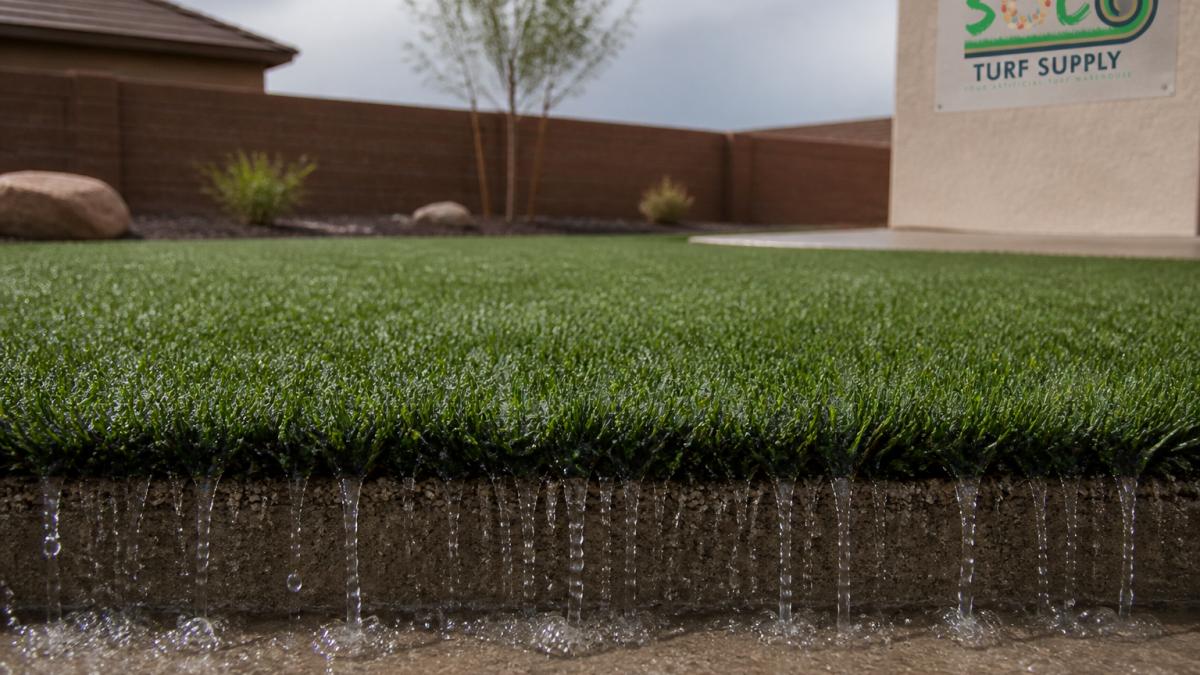
Best Turf Infill for Drainage: Quick Comparison
Silica sand drains fastest and costs least; rubber and coated crumb drain slower but add cushioning. Here is how the main infill types stack up on drainage, feel, and upkeep.
|
Infill Type |
Drainage Speed |
Best For |
Watch Out For |
|---|---|---|---|
|
Washed silica sand |
Fastest |
Budget installs, hot climates |
Compacts over time |
|
Coated silica sand |
Fast |
Pet areas, odor control |
Higher material cost |
|
Cryogenic rubber |
Moderate |
Play areas, cushioning |
Heavier, traps some moisture |
|
EPDM rubber |
Moderate |
Kids and pets, colorfast |
Can float in heavy flooding |
|
Acrylic-coated sand |
Fast |
Commercial foot traffic |
Requires precise depth |
|
Zeolite blends |
Moderate |
Ammonia and odor control |
Limited drainage gain over sand |
How We Evaluated Each Infill Type
We scored each material on four things: how quickly water moves through it, how it holds up to the Permian Basin’s heat and caliche soil, how it performs in pet and play areas, and how much maintenance it demands over time. Drainage came first. Cushioning and appearance came second, because an infill that drains poorly ruins both within a season.
Silica Sand Infill for Artificial Grass: The Drainage Standard
Silica sand infill for artificial grass is the default choice for drainage because its uniform, rounded grains leave open channels for water. It is also the cheapest and the easiest to top off later.
The key word is washed. Unwashed sand carries fines and dust that clog the gaps between grains, and once those gaps close, water stops moving. Washed, kiln-dried silica in the 16-30 mesh range keeps those channels open.
Two upgrades worth knowing about:
- Coated silica sand bonds a antimicrobial coating to the grain, which helps with pet odors in the summer heat.
- Zeolite blends absorb ammonia, a real benefit for dog runs, though they drain about the same as plain sand.
For most residential jobs around Midland, washed silica sand is the right call unless you have pets or a playground.
Artificial Turf Drainage Solutions for Homes and Commercial Sites
Artificial turf drainage solutions start below the turf, not in the infill. The infill is the top layer of a system that includes a compacted base, a drainage layer, and the slope of the ground itself.
Most failed drainage jobs are base failures. Here is what a working system looks like from the bottom up:
- Compacted sub-base of crushed aggregate, graded to shed water
- Drainage layer of washed gravel or a drainage cell for high-traffic sites
- Perforated backing on the turf itself, which lets water pass through
- Infill layer of washed silica sand, set to the right depth
- Slope of 1-2% away from structures, so water has somewhere to go
For commercial sites and RV parks, the base and drainage layer carry more of the load. A 5,000 square foot property with heavy foot traffic needs a deeper aggregate base and a properly sized drain, not just a thicker infill layer.
Artificial Turf Drainage Problems Caused by the Wrong Infill
Artificial turf drainage problems usually show up as puddles, soggy patches, or a smell that lingers after rain. The infill is often the culprit, but not always in the way people expect.
The most common causes we see:
- Fines and dust in cheap sand, which clog the pore spaces between grains
- Overfilled infill, which packs the fibers tight and slows water movement
- Underfilled infill, which lets the backing sag and creates low spots
- No base drainage, which traps water under the turf regardless of infill
- Rubber infill in flood-prone yards, which can float and shift during heavy rain
If your turf puddles after a storm, check the infill depth first, then the base. Most homeowners assume the turf is the problem when the real issue is a clogged or missing drainage layer underneath.
How Much Infill for Artificial Turf: Getting the Depth Right
How much infill for artificial turf depends on pile height and use. A good rule is to fill to roughly one-third to one-half the height of the blades, then brush it in and check the feel underfoot.
For a typical residential install with 1.5-inch blades, that works out to about 1 to 1.5 pounds of infill per square foot. Taller blades and pet areas take more. Short commercial turf takes less.
A simple way to get it right:
- Measure your pile height in inches
- Aim for one-third to one-half of that as your target infill depth
- Spread infill in two passes, brushing between them
- Check depth with a ruler at several points across the lawn
- Top off after the first month, once the material settles
Overfilling is the more common mistake. More infill does not mean better drainage. Past a certain point, it does the opposite.
Conclusion
Getting drainage right in the Permian Basin means matching the infill to the site, not just buying the cheapest bag on the shelf. The wrong choice shows up as puddles, odors, and turf that fails long before it should.
Soco Turf Supply stocks washed silica sand, coated and zeolite blends, and the base materials that make a drainage system actually work. We offer warehouse-direct pricing, UV-tested and performance-rated turf, and guidance on every project, from a single backyard in Midland to a full commercial build. Trusted by contractors across the basin for materials that stay consistent job after job.
Get an estimate from Soco Turf Supply and build a lawn that drains the way it should.
Frequently Asked Questions
What type of turf infill is best for drainage?
Silica sand is the most widely used infill for drainage because its rounded grains leave open space for water to pass through. Coated or antimicrobial infills also drain well and add odor control for pet areas. Avoid crumb rubber in low spots because it can compact and slow water movement. For Permian Basin yards with caliche soil, pair the right infill with a properly graded base for the best results.
Does silica sand infill for artificial grass actually help drainage?
Yes. Silica sand grains are uniform and rounded, so they settle without sealing the backing. Water moves through the sand layer and out the perforated backing instead of pooling on top. The key is using the right grade and depth. Too much fine sand or too little infill both reduce flow. A qualified installer can verify the sand meets your turf manufacturer’s spec before spreading it.
Can the wrong infill cause artificial turf drainage problems?
It can. Overfilled turf compacts the pile and blocks water from reaching the backing. Fine-particle infills, like some crumb rubber blends, migrate and clog the drainage holes over time. Heavy infill in a low spot also creates standing water, which leads to odors and mold in pet areas. Matching infill type and depth to your turf spec prevents most of these issues before they start.
How much infill should artificial turf have for proper drainage?
Most residential turf specs call for roughly 1 to 2 pounds of infill per square foot, worked into the pile so the fibers stay upright and water reaches the backing. Pet and commercial installations often need a slightly different rate. Always follow the turf manufacturer’s chart, because overfilling is the most common cause of drainage complaints. Check depth after installation and top off as the turf settles.