Table of Contents
- Why 2026 Is the Year to Rethink Your Pet’s Yard
- Yard Zoning: Digging Pits, Sensory Gardens, and Play Zones
- Pet Safe Landscaping Materials: What to Use and What to Avoid
- Artificial Turf for Dogs: Drainage, Odor, and Durability
- Landscaping for High Traffic Pet Areas: Paths, Beds, and Erosion Control
- Shade, Hydration, and Climate-Specific Petscaping
- Maintenance Schedules and Budget-Friendly DIY vs. Professional
- Conclusion
- Frequently Asked Questions
Last Updated: September 23, 2026
Why 2026 Is the Year to Rethink Your Pet’s Yard
Most yards are designed for people, then expected to survive dogs, hence the dead grass, muddy paws, and landscapes that worsen every season. Pet friendly landscaping flips the brief: plan for digging, traffic, and hydration first, then choose plants and surfaces that hold up around them.
Yard Zoning: Digging Pits, Sensory Gardens, and Play Zones
Yard zoning divides a landscape into distinct functional areas, each built for a specific pet activity, so dogs stop treating the whole yard as one giant play zone. A well-zoned yard typically has three or four: a digging area, a sensory or sniff garden, a traffic path, and a rest or shade zone.
Building a Digging Pit That Contains the Mess
A digging pit is a defined area filled with loose, diggable material and bordered so the contents stay put, an approved outlet for a natural behavior.
- Pick a spot away from fences and foundations, ideally visible from a window.
- Excavate 6 to 8 inches deep and line the base with a drainage layer of gravel.
- Add a sand and soil mix, or use a child-safe play sand.
- Edge the pit with pavers, timber, or a low border to contain the material.
- Bury a few toys or treats at first to teach the dog what the pit is for.
Sensory and Sniff Gardens for Outdoor Enrichment
A sensory garden is planted for scent, texture, and safe chewing rather than looks alone. Dogs explore through their noses, so pet-safe herbs and ornamental grasses give mental stimulation a plain lawn never will.
Plant sensory gardens along a fence line rather than in the center of the yard. Dogs naturally patrol perimeters, so the scent garden gets used constantly without becoming an obstacle to lawn games.
Pet Safe Landscaping Materials: What to Use and What to Avoid
Pet safe landscaping materials are surfacing and planting choices that won’t harm a dog if chewed, licked, or walked on daily. Plants and ground surfaces matter most, and both have clear winners and hazards.
Non-Toxic Flora and Plants to Skip
The fastest way to make a yard safer is to remove or avoid the plants most commonly linked to pet poisoning. Sago palm, oleander, azaleas, and foxglove are among the worst offenders, and several are common in older plantings.
| Avoid These | Safer Alternatives |
|---|---|
| Sago palm | Boston fern |
| Oleander | Rosemary |
| Azalea | Marigold |
| Foxglove | Ornamental grasses |
| Lily of the valley | Blue fescue |
Hardscaping, Mulch Alternatives, and Paw-Friendly Surfaces
Hardscaping is the non-plant portion of a landscape: paths, borders, patios, and edging. For pet yards, choose surfaces that don’t compact, hold heat, or trap mud.
Cocoa mulch smells appealing to dogs and contains theobromine. Ingestion can cause vomiting, tremors, and worse. If your yard already has it, replace it rather than risk a vet visit.
Artificial Turf for Dogs: Drainage, Odor, and Durability
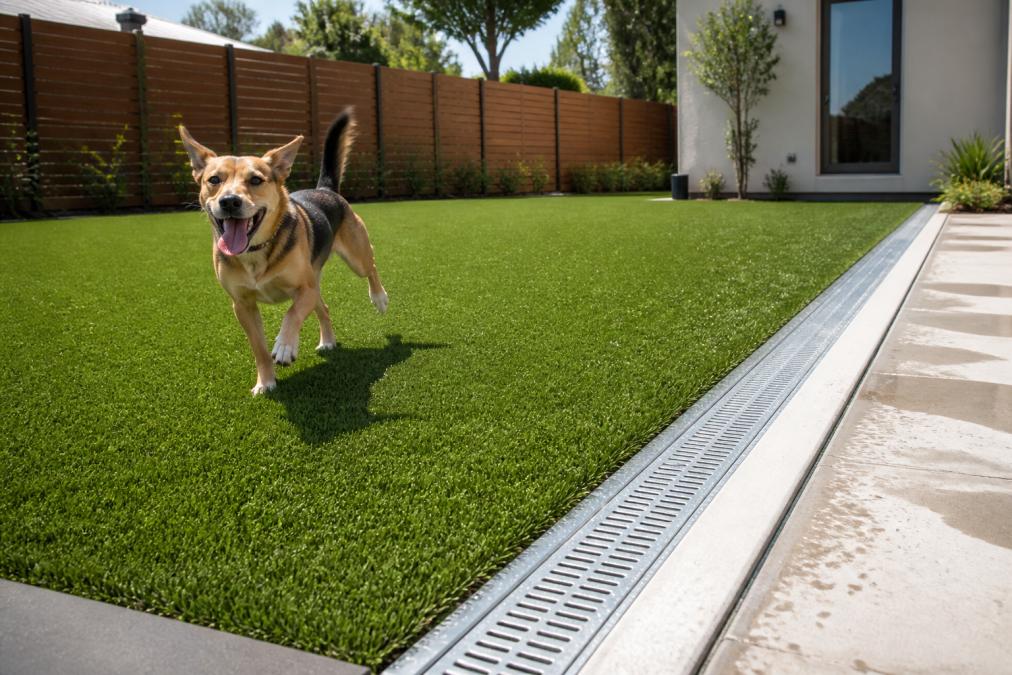
Artificial turf for dogs works when specified correctly and fails quickly when it isn’t. Drainage, infill, and backing quality decide success; get those right and a pet turf area stays clean and odor-free through heavy use.
Landscaping for High Traffic Pet Areas: Paths, Beds, and Erosion Control
Landscaping for high traffic pet areas means designing the routes your dog actually uses, then reinforcing them so they don’t turn into mud. The worn strip along a fence or between the back door and the far corner is a traffic path whether you planned it or not.
Shade, Hydration, and Climate-Specific Petscaping
Petscaping is landscaping designed around a pet’s needs, and in hot, dry climates shade and water come first. A yard without shade is unusable much of the summer, no matter how good the turf looks. The bigger differentiator most guides skip: “pet friendly” means something different in Phoenix than in Atlanta, so plant and surface choices should follow the climate, not a generic list.
Shade and Hydration That Actually Get Used
Shade structures range from shade sails and pergolas to strategically placed trees. Fast-growing trees take years to mature, so a shade sail is often the faster fix. A common pattern places shade over the rest zone and water station together, giving the dog one cool destination instead of two scattered ones.
Arid and Desert Climates
In low-rainfall, high-heat regions, prioritize drought tolerance, reflected heat, and paw-safe surfaces. Thirsty lawns lose the water battle, and dark gravel or exposed decomposed granite can get hot enough to burn pads in afternoon sun.
Humid and Rainy Climates
In humid regions the problems flip: drainage, mud, and fungal growth matter more than heat. A wet yard grows slick, and slick surfaces plus a running dog equal injury.
Cold and Freeze-Thaw Climates
Where winters freeze, the concerns are salt, ice, and freeze-thaw heaving. Rock salt and many de-icers irritate paws if licked off, so use pet-safe products and rinse paws after walks. Freeze-thaw cycles push pavers and crack poorly based turf, so base depth and compaction matter even more than in mild regions.
Match the surface to the climate first, then pick plants. A desert yard with a thirsty lawn and a rainy-climate yard with loose gravel both fail for the same reason: the surface was chosen before the climate was considered.
A Quick Regional Plant Reference
| Climate | Generally Non-Toxic Options | Surfaces That Work |
|---|---|---|
| Arid / desert | Rosemary, lavender, blue fescue, muhly grass, marigold | UV-tested synthetic turf, light pavers, stabilized DG |
| Humid / rainy | Boston fern, ornamental grasses, contained mint | Raised beds, gravel drainage strips, based turf or pavers |
| Cold / freeze-thaw | Blue fescue, ornamental grasses, protected rosemary | Compacted-base turf, properly based pavers |
Any plant on this list should still be checked against the ASPCA’s toxic plant list before planting, since reactions vary by dog and by quantity ingested.
Maintenance Schedules and Budget-Friendly DIY vs. Professional
A pet yard needs more maintenance than a decorative one, and the difference is mostly waste and wear. Most guides stop at “pick up waste and water the plants.” The honest version: a pet yard carries a real ongoing labor load, and knowing it up front keeps the design from failing in year two.
The Ongoing Labor Nobody Mentions
Beyond daily waste pickup, a pet yard needs work a decorative yard does not:
- Soil aeration. Foot traffic compacts soil, stopping water infiltration and root growth. Core aerate once or twice a year in high-traffic zones; in the worst worn strips, amend or replace the surface entirely.
- Plant pruning and division. Trampled ornamental grasses and herbs need seasonal cutting back to stay vigorous. Mint especially needs containment or it spreads.
- Turf rinsing and infill refresh. Synthetic turf needs periodic rinsing and a turf-safe pet deodorizer to keep bacteria and odor down. Infill settles and needs seasonal topping up in heavy-use areas.
- Border and edge repair. Digging pit borders, bed edging, and fence lines take abuse and need periodic resetting.
- Drainage checks. After heavy rain or irrigation, confirm water moves away from the turf base and paths, not pooling under them.
A Seasonal Maintenance Schedule
| Task | Frequency |
|---|---|
| Pick up waste | Daily |
| Rinse turf or paths | Weekly |
| Check for worn spots and border damage | Monthly |
| Aerate soil or refresh turf infill | Seasonally |
| Prune and divide sensory garden plants | Seasonally |
| Inspect fencing, drainage, and borders | Seasonally |
DIY vs. Professional: Where the Line Actually Is
Good DIY candidates:
- A single digging pit, roughly a weekend project.
- A small turf patch over an existing, already-draining base.
- Raised beds, which are essentially box building plus soil.
- Sensory garden planting in an existing bed.
Projects that usually justify a professional:
- Full-yard turf with grading and drainage.
- Any project where water currently pools or the yard slopes toward the house.
- Multi-zone layouts with paths, borders, and a digging pit that all need to drain together.
- Commercial or multi-dog properties, where the surface has to survive constant use.
Budget the maintenance, not just the install. A pet yard’s real cost is the seasonal labor, aeration, infill refresh, pruning, and drainage checks, and a design that ignores that load will look worse every year.
Soco Turf Supply supplies turf, materials, and equipment rentals directly, letting contractors and homeowners handle either path without a middleman markup. Their materials are consistent and dependable, which matters when a project spans multiple properties or phases.
Conclusion
The hardest part of pet friendly landscaping isn’t picking plants or buying turf. It’s committing to a design that treats your dog as a user of the space rather than an obstacle. Yards built around digging zones, drainage, shade, and durable surfaces hold up far better than yards that simply try to keep dogs off everything.
Frequently Asked Questions
What kind of landscaping is best for dogs?
The best landscaping for dogs combines durable surfaces with safe materials. Artificial turf for dogs handles heavy traffic without mud or holes, while raised beds and paving stones keep digging contained. Avoid toxic plants and cocoa mulch, which can cause allergic reactions or worse. A well-planned yard includes a digging pit, shade structures, and a hydration station so your dog has everything needed without destroying the garden.
Are artificial turf installations safe for pets?
Yes, when installed correctly. Pet safe landscaping materials include UV-tested, performance-rated turf that resists bacteria and drains quickly. The key is proper base preparation and drainage, which prevents odors and standing water. Warehouse-direct suppliers like Soco Turf Supply provide documentation so you can verify safety claims before installation.
How do I design a low-maintenance pet-friendly yard?
Start with yard zoning: separate a digging pit, a sensory garden, and a bathroom area. Use durable ground cover like synthetic turf or paving stones for high-traffic paths. Add shade structures and a hydration station to reduce heat stress. Choose non-toxic flora that needs little water. A simple maintenance schedule, including rinsing turf and refreshing mulch alternatives, keeps the yard clean without weekly labor.
What can I put in my backyard instead of grass for dogs?
Artificial turf is the most popular grassless alternative because it stays green, drains well, and holds up to urine and digging. Other options include clover, which stays short and fixes nitrogen, or gravel and paving stones for paths. Raised garden beds let you grow plants without dog traffic. For high traffic pet areas, a combination of synthetic turf and hardscaping gives you the best durability with minimal upkeep.