Last Updated: November 10, 2026
Quick Summary
Artificial turf stays green without irrigation, so it removes the recurring cost and labor of watering in arid regions like West Texas. Its synthetic fibers do not die during dry spells, and quality UV-stabilized products hold up to intense sun, while surface heat can be managed through fiber color, infill choice, pile density and shade.
- Synthetic fibers do not need irrigation to stay alive, removing the recurring watering cost and labor.
- Turf stays uniform through extended dry periods, unlike living grass.
- Ask for documentation of UV testing rather than relying on marketing language.
- Lighter fibers and cooler infill such as silica sand run cooler than deep greens and crumb rubber.
- Base preparation is the single biggest cost factor in West Texas and must be budgeted as its own line.
Table of Contents
- Why Desert Landscaping Is Different From Other Yards
- Water Savings and Drought Resistance in West Texas
- UV-Resistant Artificial Grass Benefits in Intense Sun
- Heat Retention, Surface Temperature and Heat Mitigation Options
- Artificial Turf for Dogs and Kids in Midland Yards
- Artificial Turf Installation Cost in Midland, TX
- Planning Your Desert Turf Project With Soco Turf Supply
- Frequently Asked Questions
Why Desert Landscaping Is Different From Other Yards
Desert yards in the Permian Basin face a combination of intense sun, low rainfall, hot winds and alkaline, sandy soil that is difficult to keep green with natural grass. Many homeowners find that conventional lawns demand heavy irrigation through the long summer months, and the results often disappoint. A well-chosen artificial turf system can change that equation, but only when it is specified for the conditions it will actually face.
The first step is recognizing that a desert lawn is not simply a lawn with less water. Soil temperature, evaporation rates and the way sunlight reflects off surfaces all shape how a yard performs. Evaluating each site against these conditions is a sensible step before choosing a product.
Water Savings and Drought Resistance in West Texas
Water is the most common reason homeowners consider artificial turf in arid regions. Because synthetic fibers do not need irrigation to stay alive, a turf lawn removes the recurring cost and labor of watering. Many homeowners find that this shift removes the need to keep grass alive through dry spells.
Drought resistance is a different question from water savings. Turf is not affected by drought the way living grass is, so it stays uniform through extended dry periods. The trade-off is that turf still needs occasional rinsing to remove dust and grit, which is a small fraction of the water a natural lawn consumes.
UV-Resistant Artificial Grass Benefits in Intense Sun
Sun exposure is the biggest threat to synthetic turf, so UV stabilization matters more here than almost anywhere else in the country. Quality turf fibers are treated during manufacturing to resist the breakdown that causes fading and brittleness. Buyers should ask for documentation of UV testing rather than relying on marketing language. Soco Turf Supply’s products are UV-tested and performance-rated.
Choosing a UV-stabilized blend is only part of the picture. Regular brushing and keeping the surface clean of debris also help the fibers retain their color and resilience over time.
Heat Retention, Surface Temperature and Heat Mitigation Options
Heat is the most frequently raised objection to artificial turf in desert settings, and it deserves a straight answer rather than a dismissal. Synthetic surfaces absorb and re-radiate solar energy differently than living ground cover, and on a July afternoon in Midland a standard turf surface can run noticeably hotter than shaded soil or a well-irrigated lawn. Learn how to prevent artificial turf heat damage in Midland and what steps help keep the surface cooler. That surface temperature is a real consideration for barefoot use, for pets, and for how the yard feels from the back door at 4 p.m.
The good news is that heat behavior is largely a specification decision, not a fixed property of turf. Four levers matter most:
- Fiber color and reflectivity. Lighter fibers, particularly those in the tan, olive and light-green ranges, reflect more visible light and tend to run cooler than deep greens and blacks. Some manufacturers now offer fibers with infrared-reflective pigments that target the invisible portion of sunlight responsible for much of the heat gain. Ask for the manufacturer’s reflectance or surface-temperature data rather than relying on color alone.
- Infill selection. Infill is often the hottest layer of the system. Crumb rubber holds heat; silica sand runs cooler; and several specialty infills are marketed specifically for heat reduction, including coated sand, ceramic-based products and organic infills. Each has trade-offs in weight, drainage and cost, so the right choice depends on how the yard will be used.
- Thatch and face weight. A denser, taller pile with a proper thatch layer insulates the backing and reduces the amount of hot backing exposed to sun. Thin, low-face-weight products heat up faster and stay hot longer.
- Shade and layout. A shade structure, a pergola, or even strategic placement of a shade sail over the most-used part of the yard can drop surface temperature substantially during peak hours. Orientation matters too: west-facing turf takes the full afternoon load, while east-facing turf cools sooner.
Heat mitigation is generally easier to plan before installation than to change afterward. Discuss heat questions with your installer before the project begins.
We recommend discussing these options with your installer before the project begins, since heat management is far easier to plan than to fix afterward.
The article lists the main levers for managing heat in a desert turf yard, summarised below.
| Lever | What to check | Why it matters |
|---|---|---|
| Fiber color and reflectivity | Manufacturer reflectance or surface-temperature data | Lighter fibers reflect more light and run cooler |
| Infill selection | Heat behavior of each infill type | Crumb rubber holds heat; silica sand runs cooler |
| Thatch and face weight | Pile density and height | Denser pile insulates hot backing from sun |
| Shade and layout | Sun exposure and orientation | Shade drops peak surface temperature; west-facing takes full afternoon load |
Artificial Turf for Dogs and Kids in Midland Yards
Families in Midland often choose artificial turf because it stays usable for children and pets year-round. Without mud, bare patches or the wear that comes from heavy foot traffic, the yard remains a dependable play area.
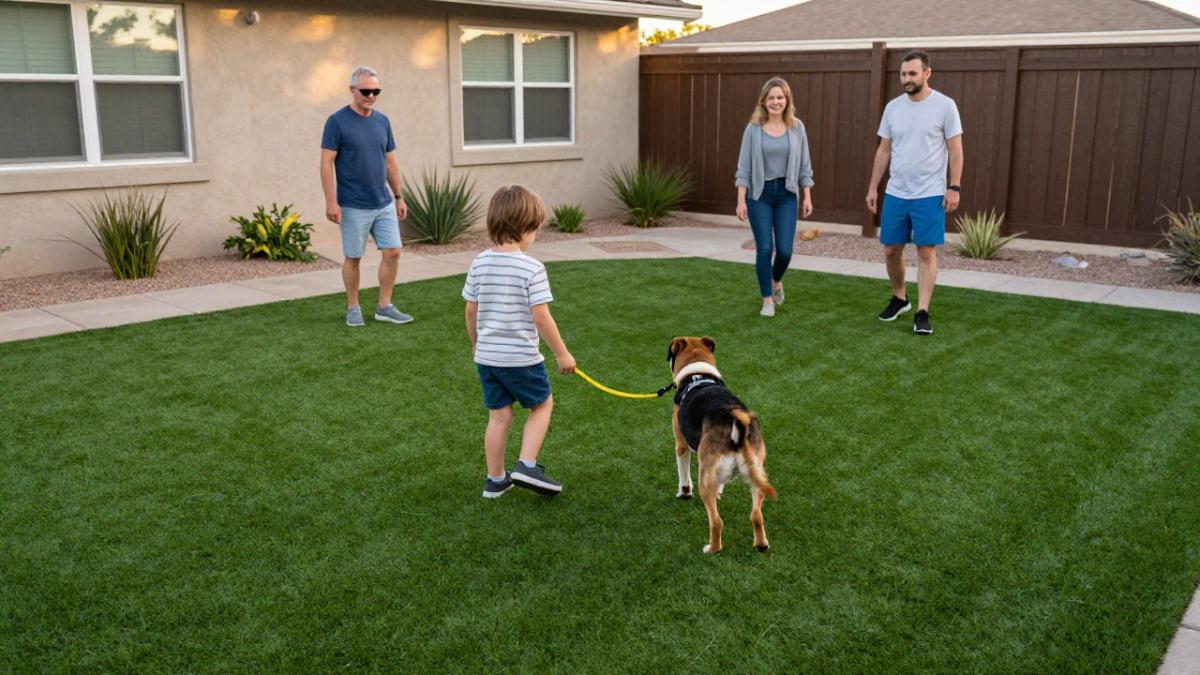
Pet owners should plan for drainage and cleaning. A properly installed system with good permeability allows liquids to pass through, and routine rinsing keeps odors under control.
Artificial Turf Installation Cost in Midland, TX
Installation cost depends on several variables, including the ones listed below. The fastest way to narrow it is to get a quote built from your actual measurements.
What drives the number:
- Area size and shape. Cost scales with square footage, but irregular shapes, tight corners and multiple disconnected areas add cutting, seaming and waste. A simple rectangle is the most efficient layout.
- Turf product. Face weight, pile height, backing construction, UV stabilization and warranty length all move the price. A builder-grade product and a high-face-weight, UV-tested product can differ substantially per square foot, and the gap is largest on larger yards.
- Base preparation. This is the single biggest swing factor in West Texas. Caliche and rocky soil require more excavation and haul-off than sandy ground, and a base that is not properly graded and compacted will fail regardless of the turf on top. Budget for excavation, base material, compaction and grading as separate line items so you can see what you are paying for.
- Drainage work. Permeability is built into the base, not the turf. Sloped sites, low spots and areas that pool during flash flooding may need additional grading, a drainage channel or a French drain, and that work is priced separately from the turf itself.
- Access and haul-off. A backyard with narrow gate access or a long carry from the street adds labor. Disposal of excavated material is a real cost in this market and should be itemized.
- Trim, borders and infill. Edge restraint, bender board, infill material and top-dressing are often quoted separately. Ask whether the quote is turnkey or excludes these items.
How to compare quotes fairly. Ask each installer for a line-item breakdown covering turf product and face weight, square footage, base depth and material, drainage, trim, infill, haul-off and warranty. A lower total that omits base depth or drainage is not a lower price, it is a smaller scope. Request the product specification sheet and UV test documentation alongside the quote so you are comparing like with like.
What to budget beyond the turf. Homeowners and contractors should also budget for base preparation as its own line. A stable, well-graded foundation is the single biggest factor in long-term performance, and skimping on it tends to cost more in repairs later. If the yard will see pets or heavy foot traffic, factor in a slightly higher infill and backing specification up front rather than retrofitting later.
Because pricing depends on quantity, dates, and delivery, visit the Soco Turf Supply website or contact the team directly with your measurements and a few photos of the site for a current quote.
Planning Your Desert Turf Project With Soco Turf Supply
Start by measuring the area, identifying how it will be used, and noting sun exposure and drainage conditions. Those answers determine the right fiber, infill and installation approach. Soco Turf Supply supplies turf, installation materials and equipment rentals, and offers warehouse-direct pricing.
Get Estimate
Frequently Asked Questions
How hot does artificial turf get on a 100 degree day?
Synthetic turf surfaces can run noticeably hotter than natural grass on a 100 degree day because the fibers absorb solar energy rather than releasing it through evaporation. Surface temperatures vary with turf color, infill type, shade, and airflow, so there is no single number that applies to every yard. Lighter-colored fibers and cooling infill options can reduce heat buildup, and watering the surface before use can help during peak afternoon hours. Ask your supplier about heat-mitigation options for your specific site.
Is artificial turf a water-efficient choice for West Texas homes?
Artificial turf eliminates the regular irrigation that natural grass needs to stay green through dry West Texas summers. Homeowners who replace high-water lawns often see a significant drop in outdoor water use, though exact savings depend on the lawn they replace, local watering rules, and how much landscaping remains. Turf still benefits from occasional rinsing to clear dust and debris, which uses far less water than irrigating a living lawn.
How do I know whether UV-resistant artificial grass is worth the cost?
UV-resistant fibers are designed to slow fading, brittleness, and surface wear caused by prolonged sun exposure. Because West Texas sun is intense for much of the year, UV stabilization is one of the most important specifications to check when comparing products. Ask for documentation of UV testing and performance ratings, and compare warranty terms alongside the price.
How much does artificial turf installation cost in Midland, TX?
Soco Turf Supply has not published pricing for this article, and installation cost depends on square footage, turf grade, base preparation, drainage needs, and delivery logistics. For an accurate estimate, contact Soco Turf Supply directly or request a quote on the website. Warehouse-direct purchasing can help contractors and homeowners compare material costs, but final project totals should be confirmed in writing before work begins.
