
Last Updated: October 28, 2026
Quick Summary
Lumpy turf almost always traces back to a base problem, not the turf itself, so walk the surface barefoot to find high ridges and soft dips before cutting into anything. Fix lumpy turf by rolling it back, removing debris, raking and compacting the base flat, then relaying the turf and brushing infill in evenly.
- Check for debris, poor base compaction, uneven infill, water pooling and lifted seams before fixing anything.
- Dampen the base slightly to help it bind, then compact in passes until flat under a straightedge.
- Repair low spots by cutting a flap, adding crushed base material and compacting in thin lifts until flush.
- Fix lifted seams by cleaning, trimming, applying seam tape and adhesive, then weighting them down to cure.
- Spread infill in light passes with a drop spreader and brush against the grain to work it between fibers.
Table of Contents
- Step 1: Find What’s Causing the Lumps in Your Turf
- Step 2: How to Level Artificial Turf Over a Lumpy Base
- Artificial Turf Low Spots Repair: Fixing the Dips
- Artificial Grass Seam Repair When Edges Lift
- Artificial Grass Infill Distribution for an Even Surface
- Get the Materials and Guidance to Fix It Right
- Frequently Asked Questions
Step 1: Find What’s Causing the Lumps in Your Turf
Lumpy turf almost always traces back to a base problem, not the turf itself. Before you touch a single roll, find the source. Here’s how to fix lumpy turf installation at the root instead of guessing.
Walk the surface barefoot. Feel for high ridges and soft dips. Then check these common causes:
- Debris under the turf: Rocks, roots, or old concrete chunks that were never cleared.
- Poor base compaction: Loose material that settled after install.
- Uneven infill: Silica sand or crumb rubber piled in spots.
- Water pooling: Drainage that fails and softens the base.
- Lifted seams: Edges curling where two pieces meet.
Most homeowners in Midland, TX blame the turf. In practice, the base is almost always the culprit.
Watch out: Skipping the diagnosis and rolling turf back blindly often spreads the damage. You can tear backing or pull seams apart.
Lumpy turf usually traces back to one of these base problems rather than the turf itself.
| Problem | Cause |
|---|---|
| Debris under the turf | Rocks, roots, or old concrete chunks never cleared |
| Poor base compaction | Loose material that settled after install |
| Uneven infill | Silica sand or crumb rubber piled in spots |
| Water pooling | Drainage that fails and softens the base |
| Lifted seams | Edges curling where two pieces meet |
Step 2: How to Level Artificial Turf Over a Lumpy Base
Leveling artificial turf starts with lifting the turf, fixing the base, and compacting it flat before you roll the turf back down.
Follow these steps:
- Cut the turf into manageable sections and roll it back.
- Remove debris and rake the base material flat.
- Dampen the base slightly to help it bind.
- Compact in passes until the surface is flat under a straightedge.
- Recheck with a level before relaying the turf.
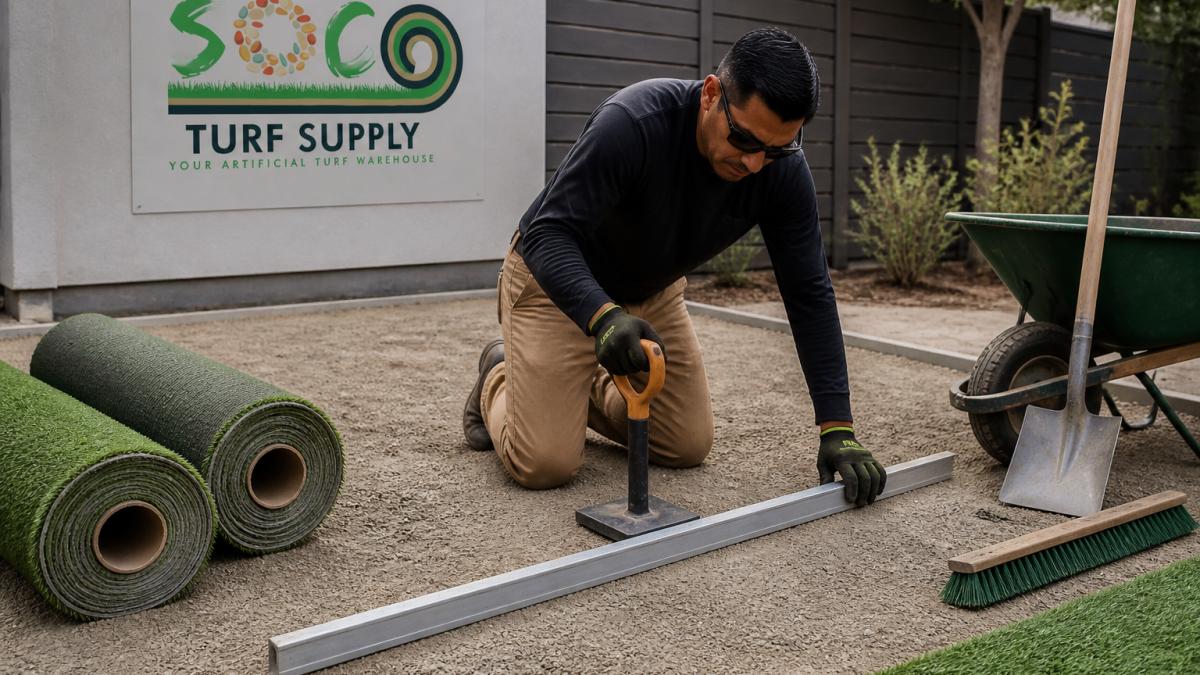
Rent a plate compactor for larger jobs. You can rent professional turf installation equipment.
Artificial Turf Low Spots Repair: Fixing the Dips
Low spots are dips where water collects and the base has settled. Repair them by cutting back the turf, adding and compacting base material, then relaying the turf.
Here’s the fix:
- Mark the dip with chalk or stakes.
- Cut an X or flap in the turf over the low area.
- Lift the flap and add crushed base material.
- Compact in thin lifts until flush.
- Relay the turf and brush the infill back in.
Drainage matters here. A repaired dip that still pools water will soften and sink again. Understanding artificial grass drainage system installation keeps water moving so low spots don’t come back.
Artificial Grass Seam Repair When Edges Lift
Seam repair fixes curling edges by trimming, re-gluing, and weighting the seam flat. Lifted seams are a top cause of “lumpy” complaints.
The process:
- Clean and dry both edges.
- Trim frayed backing with a sharp blade.
- Apply seam tape and turf adhesive.
- Press edges together and weight them down.
- Let it cure fully before walking on it.
A common mistake is gluing over dirt or moisture. The seam fails within weeks. Prep the surface first.
Artificial Grass Infill Distribution for an Even Surface
Even infill distribution means spreading material in thin, consistent layers and brushing it in, not dumping it in piles. Uneven infill creates high and low spots that feel lumpy underfoot.
Do it this way:
- Spread infill in light passes with a drop spreader.
- Brush against the grain to work it between fibers.
- Check depth with a straightedge as you go.
- Add more only where it reads low.
Choosing the right material helps. A turf infill built for drainage spreads evenly and drains well, which prevents future lumps.
Get the Materials and Guidance to Fix It Right
Fixing a lumpy install comes down to three things: a flat, compacted base, tight seams, and even infill. Get those right and the surface stays smooth.
At Soco Turf Supply, we stock the turf and professional installation materials. Our warehouse-direct pricing cuts out the middleman, and our UV-tested turf holds up to the West Texas sun. Contractors across the Permian Basin trust our materials to be consistent and dependable.
Grab the materials you need to fix it right, or check our turf repair FAQs if you have questions before you start.
Soco Turf Supply is your Midland, TX source for turf, materials, and guidance. Get your estimate today and put the lumps behind you.
Frequently Asked Questions
Why does artificial turf become lumpy after installation?
Most lumpy turf traces back to the base, not the turf itself. An uneven or poorly compacted sub-base, debris left under the backing, or a seam that has lifted will all show as a bump or ridge. Before you pull anything up, walk the area and press down on each lump to work out whether it moves with the turf or sits under it.
Can you flatten artificial turf without removing it?
Sometimes. Small ridges caused by infill migration can be smoothed by redistributing the infill with a power broom or stiff brush, then brushing against the nap. Shallow low spots may respond to topping up infill in thin layers. If the lump is hard and does not move when you press it, the cause is in the base and the turf needs to be lifted and re-leveled.
How do you fix low spots in artificial turf?
Mark the dip with chalk, lift the turf back to the nearest seam, and check the base underneath. Fill and compact the low area until it matches the surrounding grade, then re-lay the turf and brush it in. For shallow dips you can add infill in thin layers instead, but never pile it deep in one spot. Compacting each layer as you go prevents the fill from settling later and creating a new low spot.
Can infill help smooth uneven artificial turf?
Yes, for minor unevenness. Even infill distribution can be applied in thin, brushed layers. It will not fix a lump caused by a raised base or a lifted seam. Use a drop spreader for large areas and a hand scoop for edges, then brush in two directions. Check the depth against the manufacturer’s recommendation for your turf blend before adding more.
